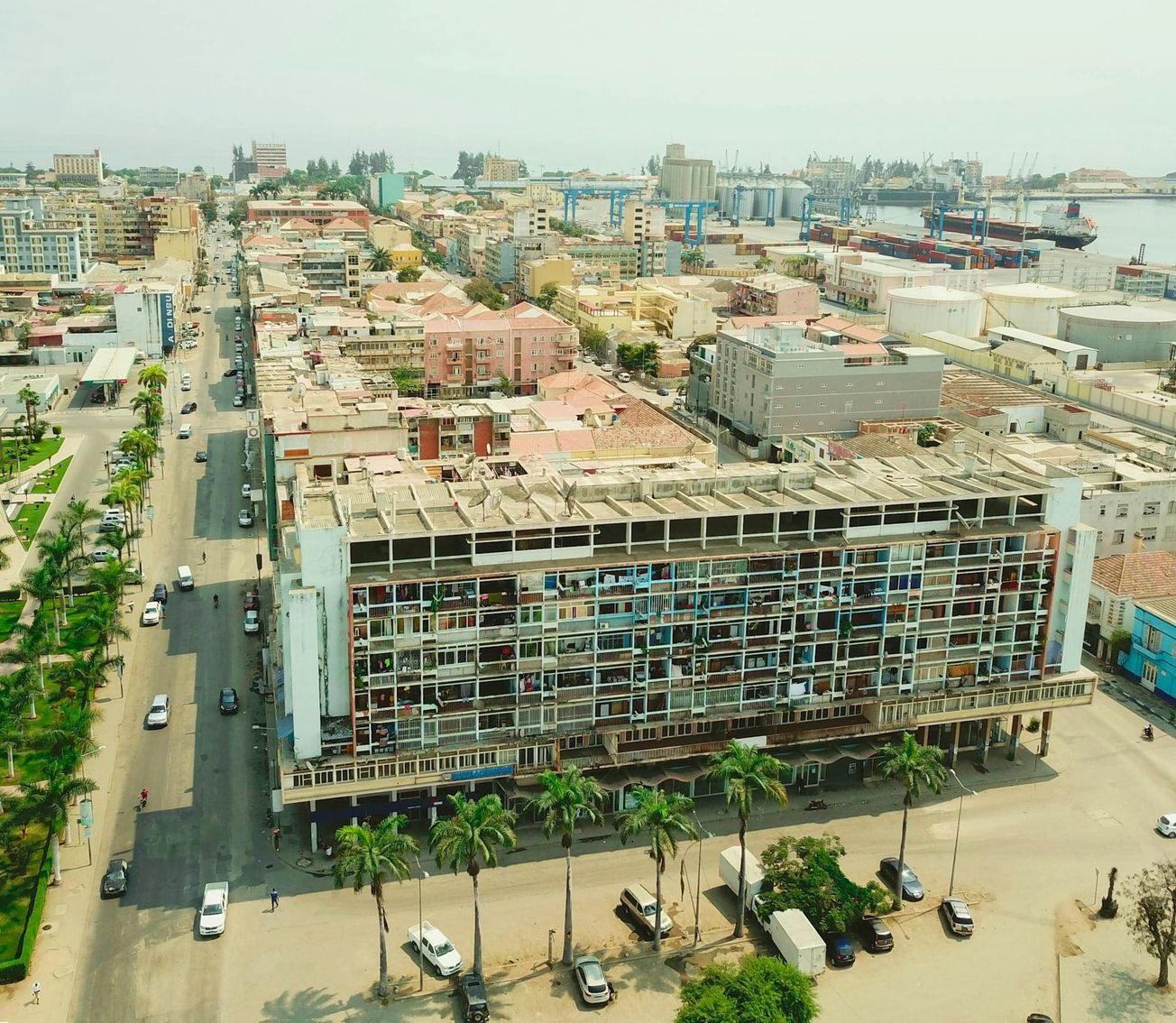
Angola has been at peace for more than two decades, universities have expanded across the country and billions of dollars are being committed to infrastructure outside the capital. Yet Luanda remains the country's overwhelming political and economic centre, continuing to draw people, businesses and investment from across Angola.
That imbalance was the focus of this week's Angola Briefing, hosted by Zitamar editor-at-large Fernando Lima with economist Francisco Paulo and Florindo Chivucute, founder of Friends of Angola.
For Paulo, the concentration is visible in the numbers. He cited National Statistics Institute data showing Luanda accounting for roughly 30% of national GDP, compared with around 17% for oil-producing Zaire and 7% for Benguela. But the disparity becomes more striking when tax receipts are considered: Paulo said 94% of Angola's non-oil tax revenue is recorded in Luanda.
Part of the explanation is corporate structure rather than where economic activity physically takes place. Oil companies may operate in Zaire or Cabinda, mining companies elsewhere, but their headquarters and tax registration are generally in Luanda.
The result is a reinforcing cycle. Companies establish themselves in the capital because ministries, banks and decision-makers are there. Public institutions remain concentrated there because the country's economic activity is organised around Luanda. Skilled workers then have another reason to migrate to the city.
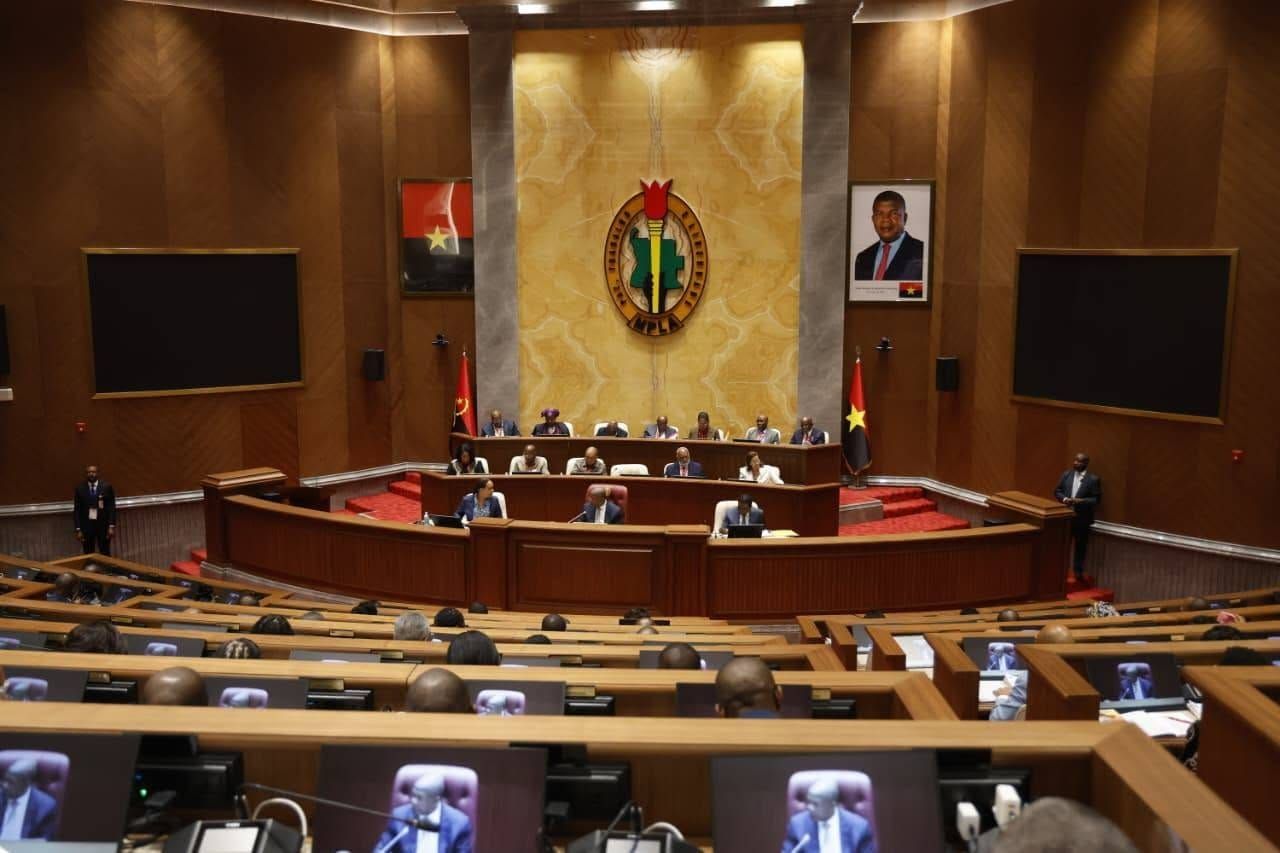
"All the ministries are in Luanda," Paulo said, questioning why institutions overseeing sectors concentrated elsewhere could not themselves move closer to those industries. Angola's expansion of public universities provides one example of how decentralisation can change behaviour: students who once had to move to Luanda for higher education can increasingly study in their home provinces.
Investment is not enough
The government has long tried to encourage investment outside the main economic centres through tax incentives. Paulo argued that these measures have limited effect when companies face more fundamental problems.
Businesses do not choose a province simply because the tax treatment is attractive if electricity, transport, skilled labour or other essential infrastructure is missing.
Public procurement could be just as important. Paulo argued that hospitals, schools and municipal administrations should be able to buy more services from companies based in their own areas instead of relying on contractors headquartered in Luanda.
If a hospital in Benguela needs cleaning, catering or another service, he argued, procurement should provide opportunities for Benguela businesses. Repeated across the country, relatively ordinary government contracts could help provincial SMEs accumulate revenue, employ local workers and build capacity.
Chivucute made a similar argument from a political perspective. Angola may have policies intended to promote development elsewhere, he said, but the benefits are often weakened by poor implementation and by the concentration of major contracts among a relatively small number of larger companies.
For both panelists, decentralising spending without decentralising decision-making would therefore achieve only so much.
Could Lobito create another centre of gravity?
The Lobito Corridor offers perhaps the most ambitious current test of whether major investment can generate economic activity beyond Luanda.
Angola says the broader corridor programme now contains 144 potential projects associated with more than $12 billion of investment. During the discussion, however, both panelists stressed that the important question is not the headline value but what emerges around the railway.
Paulo noted that the corridor is competing with other routes serving mineral-rich Zambia and the Democratic Republic of Congo. Its success will ultimately depend on whether freight actually moves through Lobito efficiently and competitively.
Chivucute argued that its value to Angola will depend on going considerably further than carrying copper and other minerals from neighbouring countries to the Atlantic.
He pointed to plans for agricultural storage facilities in places such as Caála, Huambo, as an example of the infrastructure that could connect Angolan producers to the railway. Local processing and manufacturing would deepen the impact further.
"If it carries only minerals, then people along the line won't benefit," Chivucute argued.
The distinction is important. A successful railway can generate transit revenue without creating broad prosperity along its route. A genuine economic corridor would instead create demand for farmers, warehouses, manufacturers, logistics companies and workers in Benguela, Huambo and Moxico.
Chivucute said he was optimistic about the corridor, but warned against reproducing an economic model based largely on extraction. Investment, he argued, needs to include skills transfer, local processing and stronger links to the communities through which the corridor passes.
The wage question
The dispute at the Lobito Refinery brought the question of local benefits into sharper focus.
Workers involved in construction of the multi-billion-dollar project have gone on strike over pay. The discussion centred on reports of employees earning around Kz100,000 a month, with workers seeking a much larger increase.
Paulo argued that applying something close to a national minimum wage to specialised workers building a refinery misunderstands the economics of the project. Pay, he said, should reflect the productivity and profitability of the sector rather than treating all employment as interchangeable.
He also raised the gap between Angolan and expatriate remuneration on major projects, arguing that persistently low local wages reduce the ability of investment to generate wider economic demand.
Chivucute went further, linking wages to Angola's weak domestic purchasing power. Large infrastructure projects can add to GDP, he argued, without producing the kind of household income growth that creates a stronger consumer economy.
That same question applies to the Lobito Corridor: the number of dollars invested is less important for households than the quantity and quality of jobs and businesses ultimately created.
Decentralising power
The conversation ultimately returned to politics.
Chivucute argued that the dominance of Luanda cannot be separated from Angola's highly centralised political system. Local administrations remain dependent on decisions and resources from above, while long-discussed elected local authorities — autarquias — have still not been introduced.
Paulo reached a similar conclusion from an economic direction. Municipalities, he said, need the administrative and financial authority to decide which schools or other infrastructure they require and which local companies should supply public services.
Officials in Luanda cannot be expected to understand every local priority.
The objective, then, is not simply to redirect more central government money towards the provinces. It is to build local institutions capable of deciding how some of that money is spent, while giving provincial businesses a realistic chance to benefit from the resulting economic activity.
Angola already has major investment under way outside the capital. The harder task is ensuring that the next railway, refinery, hospital or agricultural project leaves behind businesses, skills, incomes and institutions that remain rooted there.
That will be the real test of whether Angola can develop beyond Luanda.

Sign up to Zitamar News and select the Angola Briefing newsletter to receive every issue in your inbox.