
By the Numbers
Data highlights in Cabo Delgado province (9 - 22 February 2026)
At least 7 political violence events (2,331 in total since 1 October 2017)
At least 6 total reported fatalities from political violence (6,466 since 1 October 2017)
0 reported civilian fatalities (2,719 since 1 October 2017)
At least 4 political violence events involving ISM across Mozambique (2,162 since 1 October 2017)
Overview
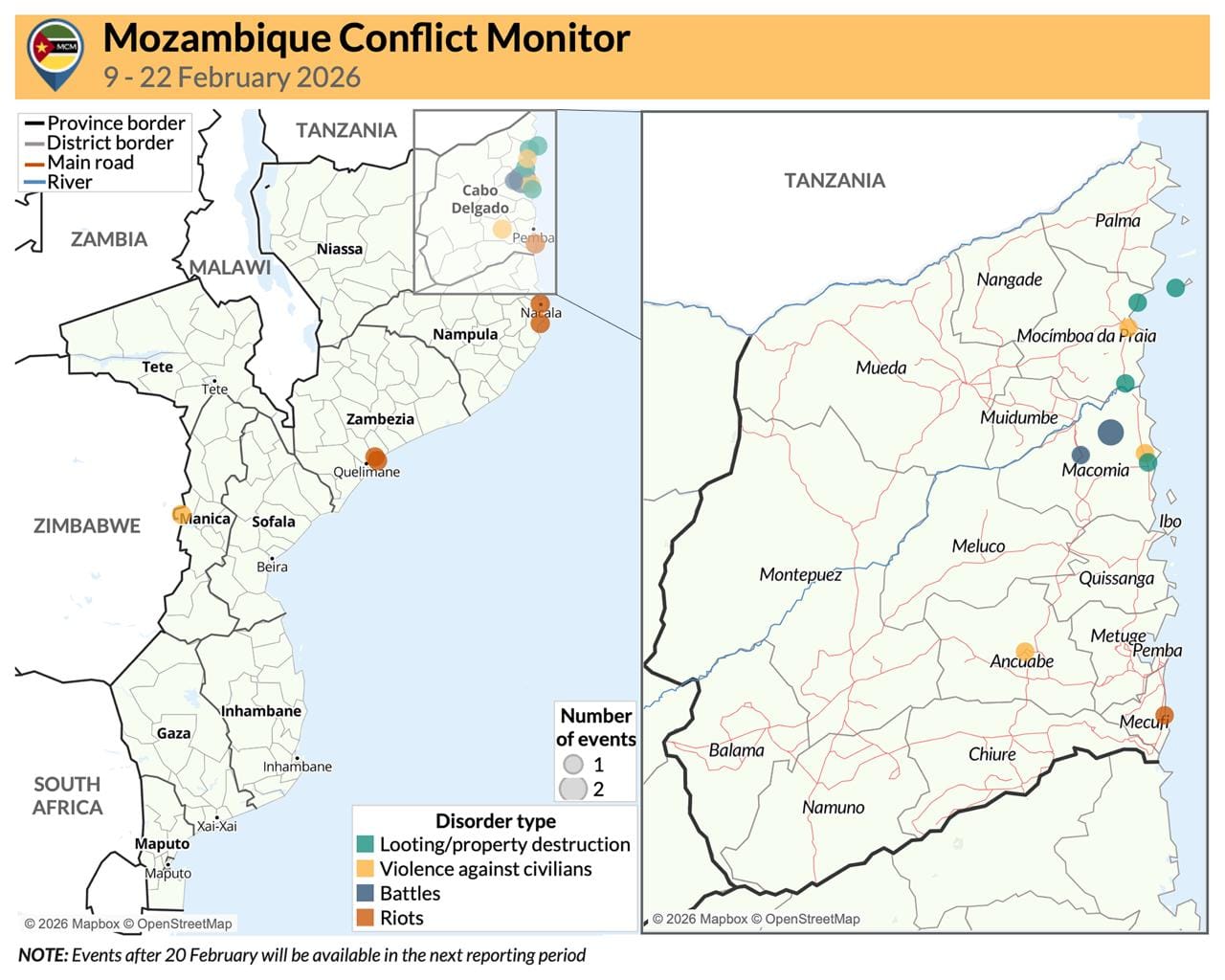
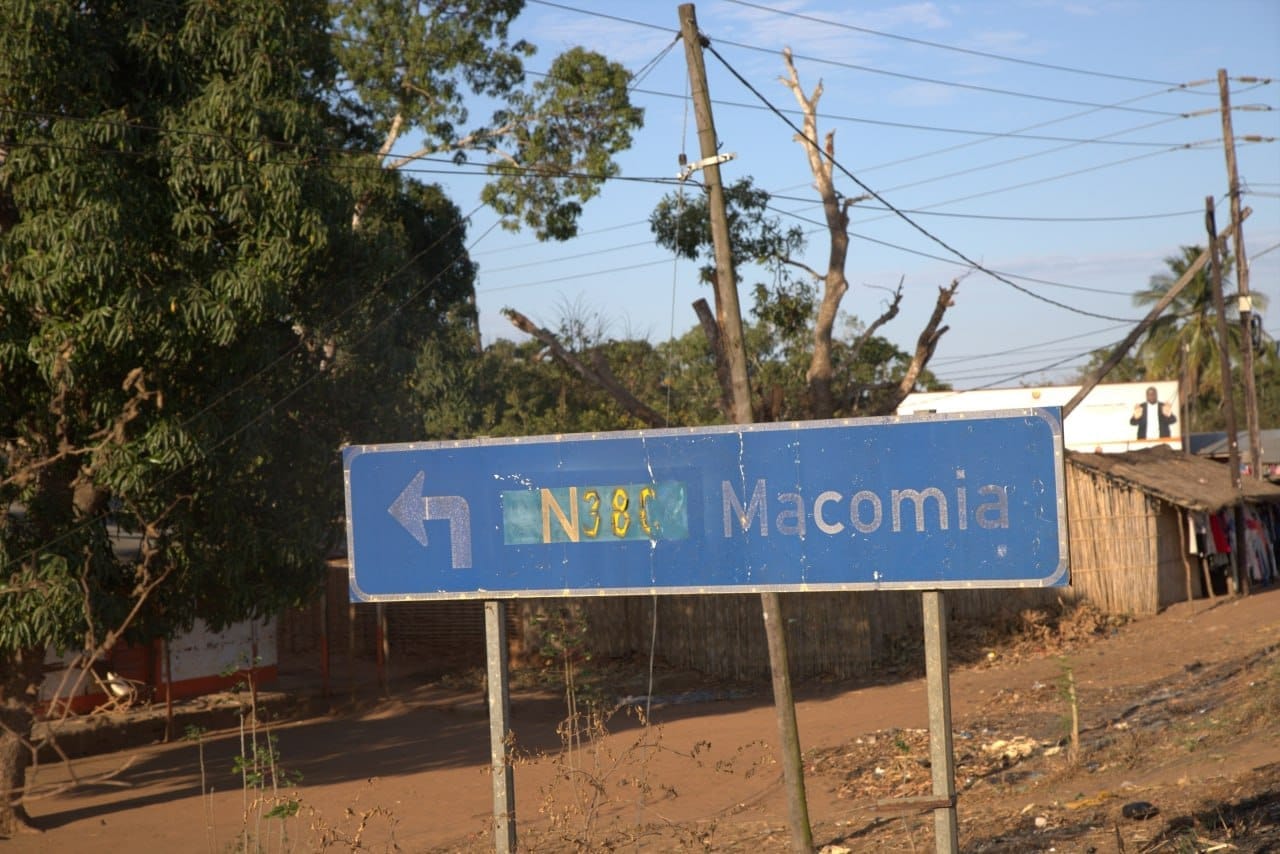
Over one week into Ramadan, Islamic State Mozambique (ISM) has continued to focus on sourcing supplies of food and other basic necessities. Militants based in Catupa forest ambushed a commercial convoy on the N380, leading to sustained clashes with state forces and at least three fatalities, a figure likely to rise. Along the coast and on offshore islands, interactions with communities have been relatively subdued, with supplies either taken or purchased. Only one violent action took place on the coast — the firing of a rocket-propelled grenade at a Mozambican military base on Mocímboa da Praia’s outskirts.
Situation summary
Clashes intensify in Catupa and on the N380
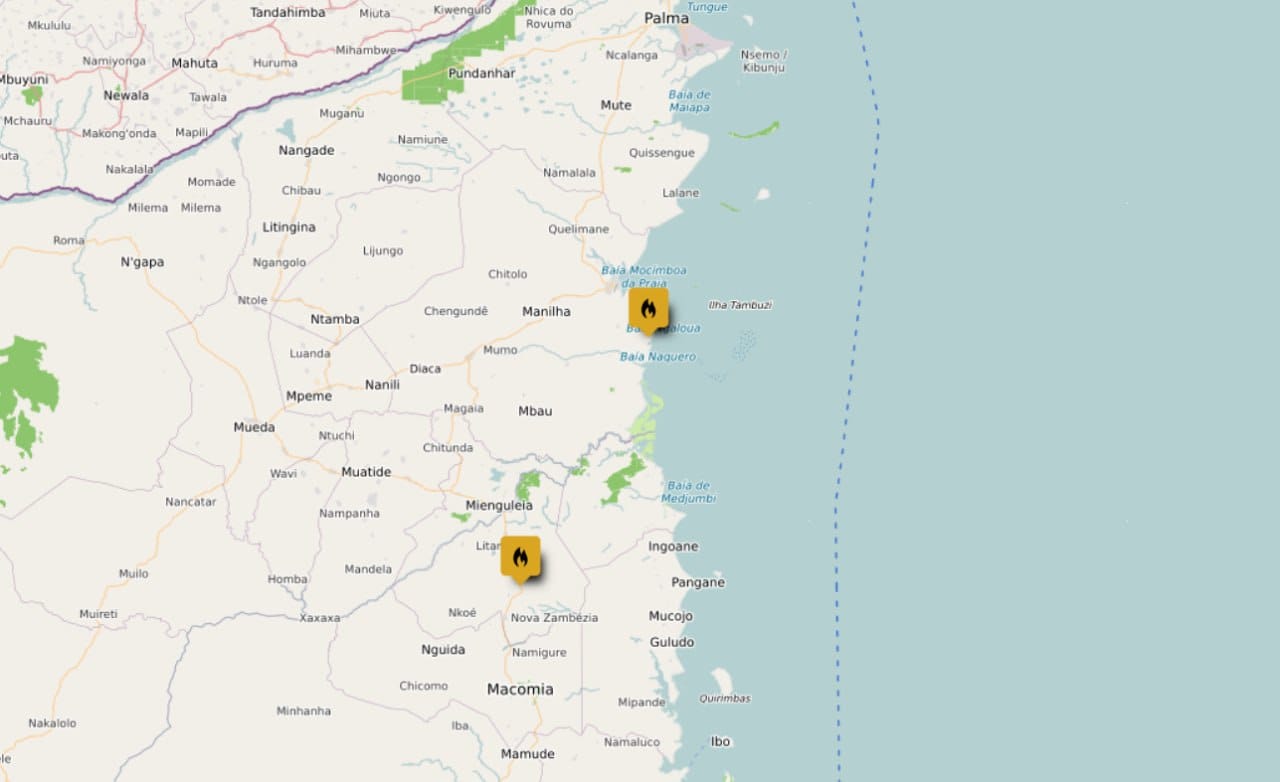
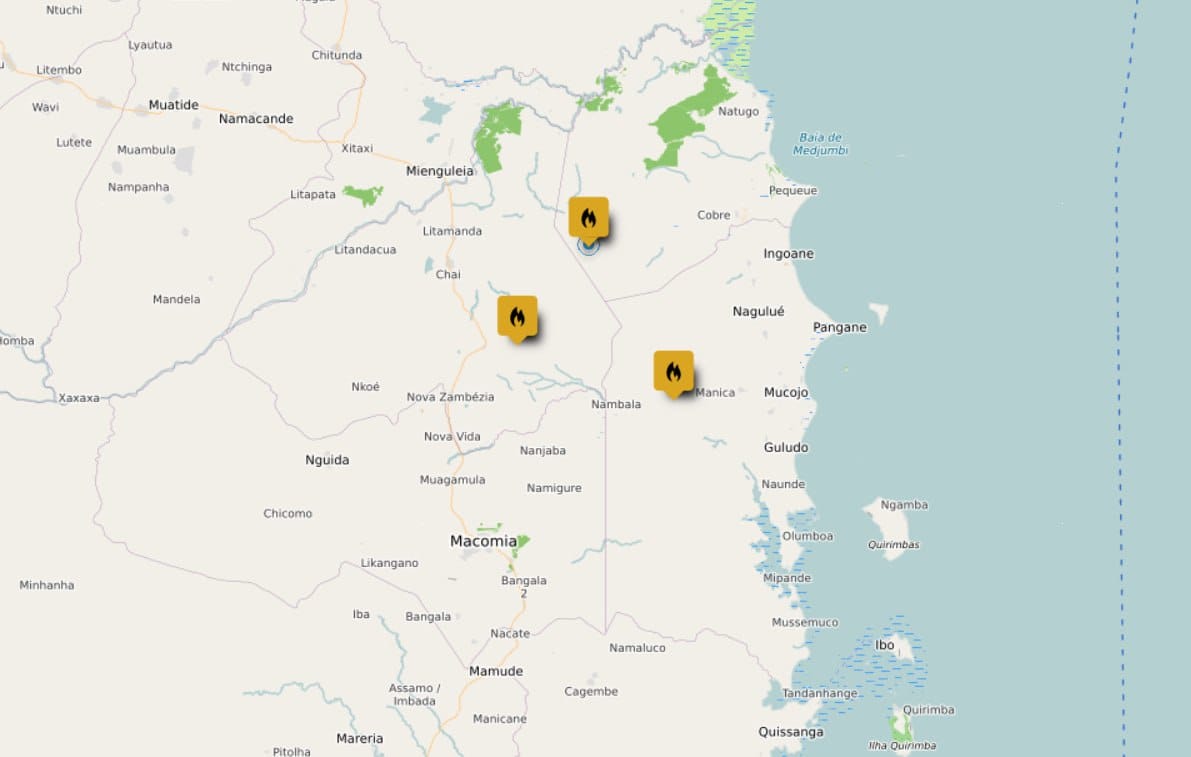
ISM fighters attacked a commercial convoy near Quinto Congresso on the N380 on the morning of Sunday 22 February, Zitamar News reports. According to local sources, clashes continued in the area on the subsequent Monday and Tuesday involving ISM, the Local Force, and the Mozambican and Rwandan militaries. The Islamic State (IS) claims 14 fatalities in those clashes among the “Mozambique-Rwanda coalition.” The Sunday ambush came nearly two weeks after failed efforts by the Defense Armed Forces of Mozambique (FADM) to regain control of its former Namabo and Catupa positions in Catupa forest, which lie east of Quinto Congresso.
The initial 22 February ambush took place outside Quinto Congresso village at around 10 a.m. as the convoy, with a military escort leading, was traveling north from Macomia town. According to sources, the escort vehicles were allowed to pass before the commercial vehicles were attacked.
Pictures in circulation on social media indicate that a number of people were injured in the attack. According to two sources in contact with people in the convoy, the driver of one truck was shot and died at the scene. A military source told DW that ISM killed one child in the attack, and that two ISM militants died in a clash that continued until Rwanda Defence Force (RDF) reinforcements arrived later in the day. However, sources in the area state that clashes continued on 23 and 24 February involving FADM, the police Rapid Intervention Unit, the Local Force, and the RDF.
The primary purpose of the ambush was to loot goods. One witness, who was part of the convoy, overheard attackers saying “this cement truck is a nuisance, better the rice truck.” According to two sources, sacks of rice from one truck were taken into the bush on the Catupa side of the N380 road, toward the FADM position at Namabo, 4 kilometers east. One source estimated that up to 100 ISM militants, including children, were involved in the attack, some in combat, others busy with unloading cargo from affected vehicles.
The 22 February ambush followed clashes in the Catupa forest area between 6 and 9 February when FADM sought to regain control of the area following the 31 January attacks on two of their positions there. Based on reports from sources in the area, Lusa, and the Islamic State’s (IS) weekly al-Naba newsletter, FADM attempted to regain control of the Namabo and Catupa positions on 6 and 8 February. According to al-Naba, despite FADM deploying infantry with air cover, likely helicopters, ISM killed one FADM soldier at Namabo and another five at Catupa. In the subsequent two days, al-Naba claims that ISM killed two more soldiers, who had been fleeing the fighting, along with one more isolated soldier on 14 February. A source in Pemba also said that a number of wounded soldiers were treated in Pemba Provincial Hospital. According to Lusa, military sources say FADM killed three ISM fighters and wounded others in Sunday’s clash.
The ambush and subsequent clashes around Quinto Congresso suggest that the casualty numbers will likely rise, and that further operations to tackle ISM in Catupa forest can be expected soon.
ISM resupplies on the coasts of Palma and Mocímboa da Praia
ISM was also active along the Palma and Mocímboa da Praia coasts, approaching a number of villages for food and other basic supplies, Zitamar News reports. Despite a probing attack on FADM in Mocímboa da Praia, the majority of these approaches were far less confrontational and did not result in casualties or outbreaks of fighting. The challenge for authorities is to assess the extent to which these events indicate tolerance of, or even popular support for, the insurgents in coastal communities.
On 14 February, militants arrived at Palma’s Quifuqui island, where they took supplies before moving to Maculo on the mainland, north of Mocímboa da Praia, for yet more supplies. The group then moved north by boat toward the Tanzania border, according to local sources. FADM forces arrived at Quifuqui later that day, having been called by islanders, suggesting a good relationship between FADM and the Quifuqui community.
ISM was also active on Mocímboa da Praia’s southern outskirts. On 16 February, militants fired a rocket-propelled grenade at the FADM base at Anga, less than 3 km southeast of the town’s airport. There was no follow-up action, suggesting the purpose was to assess reactions.
The following week, on 21 February, ISM sent children to buy rice and other goods in the Nambubussi neighborhood on the outskirts of Mocímboa da Praia, according to sources in the area. The insurgents then sailed to Ulo, farther along the coast, where they made more purchases. It is likely that it was this group that kidnapped seven people at Kitope village, also on 21 February. The hostages made it back home the following day.
Businessmen face pressure on the Macomia coast
The Macomia coast remains a zone where ISM and state forces from Mozambique and Rwanda vie for control. For businesses operating in the area, this is a complex environment to navigate, as illustrated by two raids targeting businesses on 12 February.
First, in Nacutuco, close to Mucojo village, a trader was arrested by people believed locally to be from the National Criminal Investigation Service (SERNIC). The trader is likely suspected of being part of ISM’s logistics network. Security forces are particularly suspicious of businesses operating in areas where insurgents are present or where communities are thought to be sympathetic to them.
On the same day in nearby Nambo village, an unidentified armed group raided the premises of a trader who also operates as a mobile money agent, stealing 80,000 meticais (over 1,200 US dollars) according to a local source. Such a sum is unusually large for a mobile money agent operating in a rural, conflict-affected area.
These two events are not isolated. In January, the detention of a businessman in Macomia town, again by an unidentified armed group believed locally to be security forces, sparked demonstrations in the town.
Cholera incident in Mecúfi
In Natuco village in Mecúfi district, police arrested 13 people for their involvement in an attack on a cholera treatment center in the village on 18 February. This is the fifth violent attack this month on cholera treatment facilities or health workers addressing the epidemic in Cabo Delgado and Nampula provinces. Those arrested are accused of destroying patient tents at a treatment center. An underlying driving factor in such attacks has been superstitions about the behavior of health workers and deep distrust of the state. According to Radio Sem Fronteiras, a Catholic church broadcaster in Pemba, this latest incident was sparked by a dispute about food aid distribution involving a family displaced from Memba district in Nampula. The incident highlights the tense environment among communities in Cabo Delgado.
Focus: Ramadan priorities
This year’s Ramadan message from IS spokesperson Abu Hudhayfah al-Ansari makes no demand on affiliates regarding their behavior during the month. He urges them to spend nights both “standing on the front lines, and in the prayer niches.” Al-Ansari’s statement is the first since January 2024 when IS launched its “Kill them wherever you find them” media campaign. This year’s message is less specific and less bombastic. Most of the statement focuses on the group’s decline in Syria. This is balanced against progress made in Africa, which, according to ACLED data, accounted for approximately 80% of IS violence globally in 2025.
The message concludes with a call for continued “hijra,” or migration to centers of conflict, and for “mujahideen” to be wary of intelligence operations against them. There is also a call for increased use of suicide bombings.
Ramadan has obvious importance for ISM, but not enough to consistently shape its behavior. Some years, it has spent the month in the prayer niche, others on the front line. Since at least 2023, there has been no consistent pattern to ISM’s behavior during Ramadan. In 2023 and 2024, there were significant dips in political violence involving the group during the month. In 2025, there was no noticeable change in ISM behavior, while this year, ISM violence seems to be on the rise after a sharp decrease over December and January. For this year, rains, now easing, are likely a more important contingent factor on ISM behavior than the calendar.
For ISM, migration of fighters from Tanzania and beyond has been critical in its development. Two of its most senior figures — spiritual leader Ulanga and Suleiman Nguvu — are Tanzanian, so we can expect these links to endure. However, the introduction of suicide attacks is unlikely in Mozambique. Where IS affiliates in Somalia and Nigeria have undertaken vehicle-based suicide attacks against military positions, the Catupa attacks illustrated that ISM is well able to take out state forces’ positions using conventional guerrilla tactics. Suicide attacks against larger positions in urban areas would bring little strategic benefit to ISM, given the number of fighters it would have to commit.
Roundup
Chapo reshuffles navy leadership, calls for modern armed forces
President Daniel Chapo has dismissed Mozambique’s navy commander, Eugénio Dias da Silva Muataca, appointing Commodore Bernardo Estevão Nchokomala as his replacement and promoting him to rear admiral. Several FADM officers were also promoted, in what the presidency says is an effort to strengthen strategic leadership and national defense.
Speaking a day later at the opening of the 2026 military operational year, Chapo urged the armed forces to become more modern and operationally prepared, stressing that combating terrorism remains a central mission. He called for improved training, modern equipment, and stronger coordination to address increasingly complex security threats.
Military registration in Cabo Delgado drops as youth turnout declines
Military authorities in Cabo Delgado have reported an 18.96% fall in youth participation during the first six weeks of the 2026 military registration campaign, raising concerns over recruitment targets. By mid-February, 11,378 young people had registered — just over 72% of the 15,789 target — down from 14,372 a year earlier. Officials cite heavy rains, difficult access to remote areas, and delays in the school calendar as reasons for the decline. The campaign, which began on 2 January, runs until 28 February with more than 100 registration agents deployed across the province.
)