
By the Numbers
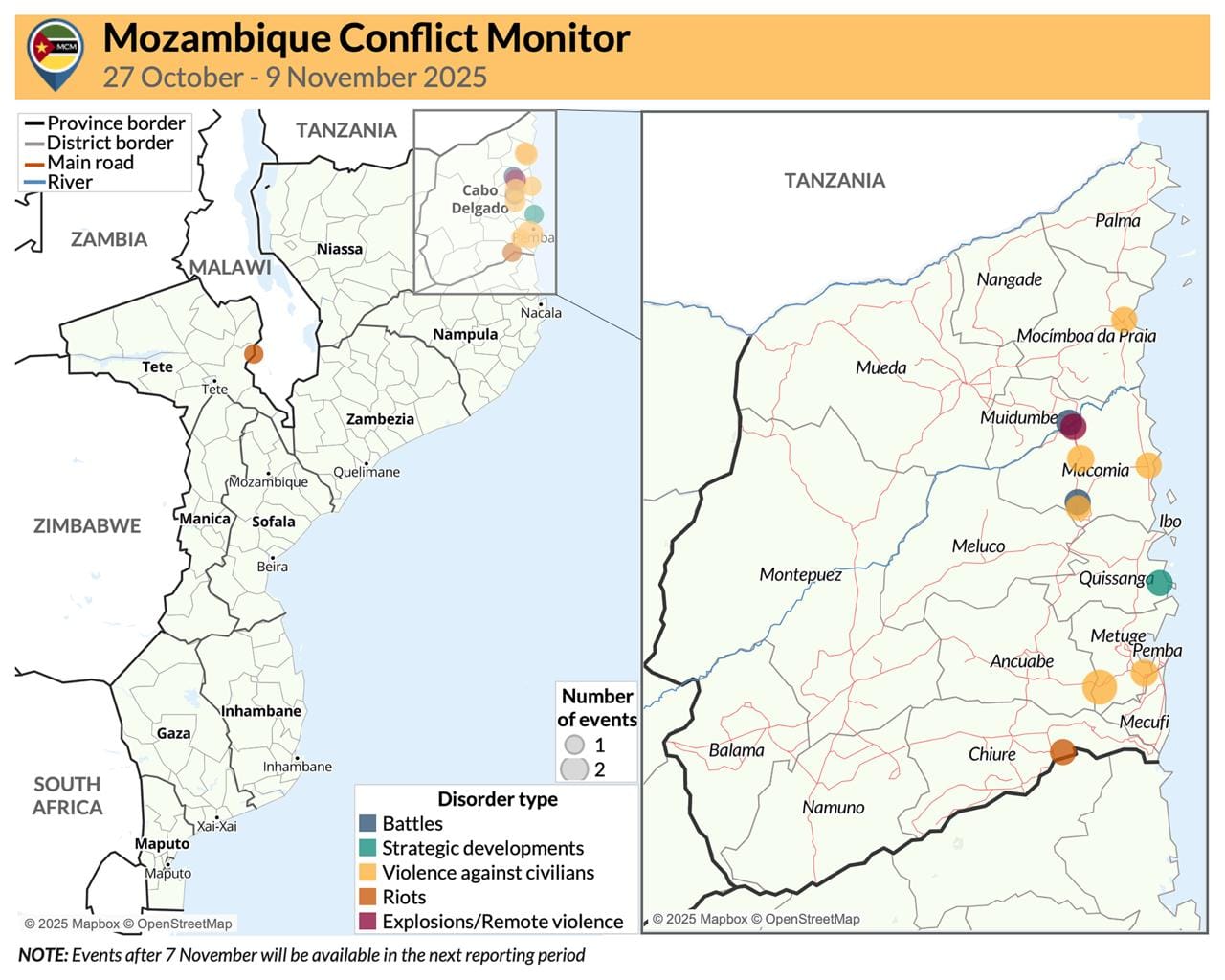
Data highlights in Cabo Delgado province (27 October - 9 November 2025)
At least 11 political violence events (2,251 in total since 1 October 2017)
At least 10 total reported fatalities from political violence (6,316 since 1 October 2017)
At least 10 reported civilian fatalities (2,670 since 1 October 2017)
At least 10 political violence events involving ISM across Mozambique (2,077 since 1 October 2017)
Overview
Islamic State Mozambique (ISM) was active in seven districts of Cabo Delgado province. ISM militants once again entered Mocímboa da Praia town, this time to take two of the children of Farido Selemane, the group’s military commander. They met no resistance from residents or state forces in the town. Some fighters finally returned to Muidumbe and Macomia districts, from Balama and Montepuez districts in the southwest, where they had been since the end of August. There was notable activity in districts south of Macomia, particularly in Quissanga, where Cagembe village has clearly become a hub for the group.
Situation summary
ISM returns to Mocímboa da Praia unimpeded
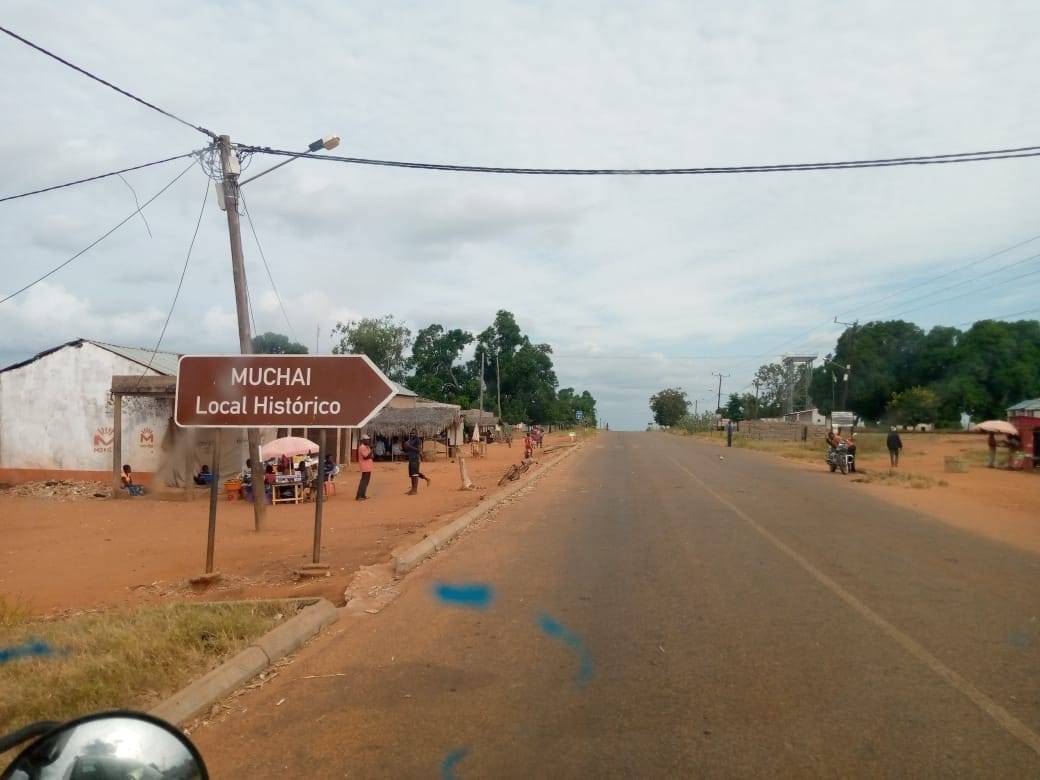
On the night of 5 November, a group of ISM fighters took two children from the Milamba neighborhood of Mocímboa da Praia. Multiple sources agree that they are the children of Farido Selemane, military commander of ISM, and were taken on his order. In addition to the group that entered Milamba, another group went to the Aeroporto neighborhood, also on the southeastern side of town. Neither group met any resistance, nor did they threaten residents.
Farido came to prominence in 2022, when he was promoted to a senior leadership position. He has been the military commander since the death of Bonomade Machude Omar in August 2023. Though the military commander of the insurgency, he has significant religious education and was a mosque leader in Mocímboa da Praia before the insurgency. Originally from the Milamba neighborhood, he is understood to be in his late 30s, according to local sources.
Although not as high-profile as ISM’s appearance at a mosque on 7 October, the incident illustrates similar issues. The groups were able to freely move through parts of the town, to an extent that, according to one source, neither the Defense Armed Forces of Mozambique (FADM) nor the Rwanda Defence Force (RDF) felt free to intervene, fearing either injury to, or even a confrontation with, residents.
Clashes in Muidumbe and Macomia district
Clashes were reported in both Muidumbe and Macomia districts, likely involving ISM militants who have returned from Balama and Montepuez districts. On 27 October, FADM continued shelling ISM positions around Nguri lake, east of Miangelewa in Muidumbe district. The shelling had begun on 26 October. Also on 27 October, ISM clashed with a joint FADM and RDF patrol near Miangelewa. No casualties were reported.
Closer to the coast, in Macomia district on 3 November, ISM clashed with FADM near Unidade village, south of Quiterajo town. According to a report in the Islamic State weekly al-Naba, ISM thwarted a FADM attack on one of its positions. ISM seized a grenade launcher, two automatic rifles, three machine guns, and some ammunition, according to al-Naba.
Although successful, the ISM group at Unidade seems to have moved south following the clash, according to sources in the Mucojo area. Between 3 and 5 November, a group of insurgents, among them women and children, was reported to have moved southward through Cogolo village, approximately 17 kilometers south of Unidade. Counterintuitively, this brought the group closer to an RDF position at Mucojo town. The group may have been trying to make its way to Quissanga district, where ISM militants regularly congregate, according to local sources.
ISM fighters remain active in wooded areas around Macomia town on the N380, which are popular with hunters. IS issued a claim for the 29 October killing of two civilians near Machova, southeast of Macomia town. Twenty-five km north of Macomia town, ISM entered Quinto Congresso village on the night of 8 November, killing one man, after asking for him by name.
ISM reaches out to communities in Quissanga
ISM was active in Quissanga district, for the most part interacting non-violently with residents. Between 31 October and 2 November, its members were present in Cagembe village. This is at least the 11th appearance the group has made there since January 2024. None of these appearances have included violence. According to a source, the group continued its way southeast of Cagembe, on the coast, where ISM fighters entered Arimba village. There, they preached in the mosque for some time. According to al-Naba magazine, the lecture focused on the “purpose of God’s creation.” According to other sources, they also took some food from the village.
ISM’s continued presence in the south
Further south of Quissanga, the group was active in Metuge, and Mecufi districts, and is thought to be continuing further south of those districts. According to one source, the objective of the push south is to reach Nampula to bring in new recruits, and secure financing through targeting gold mines.
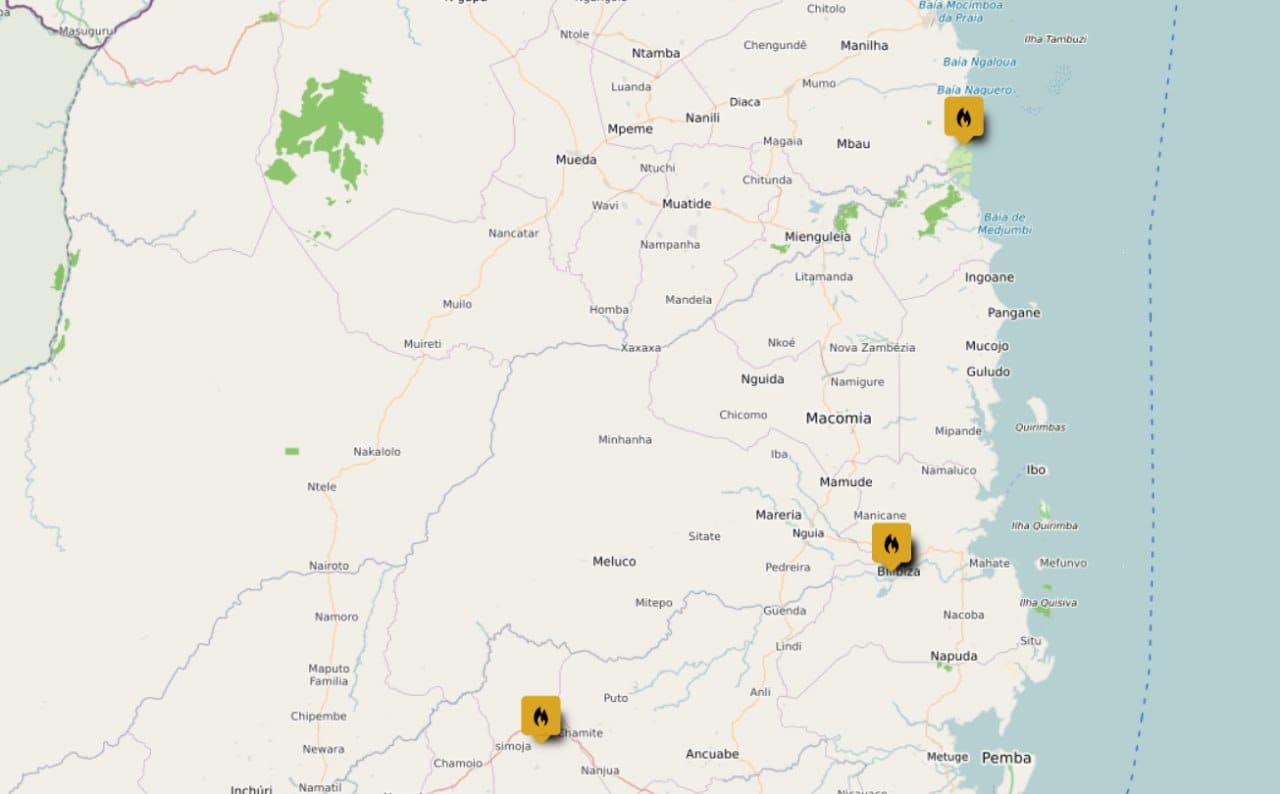
On 29 October, ISM militants stormed an informal gold mine near Impire on the N1 road from Pemba. On 8 November, ISM kidnapped up to eight civilians near Mieze village, according to various sources. Mieze also lies on the N1, 10 km west of Pemba town. The group demanded ransoms of up to 30,000 meticais. According to one source, a ransom of 15,000 was paid for the release of one woman. RDF and FADM were deployed to the area that day, but they withdrew by nightfall, according to a source. The following day, another group was seen near Impire in Mecufi district, moving south.
Further south again, on 1 November police fired on civilians waiting for food aid in Napala village in the south of Chiúre district, killing two. The incident illustrates the tense relations between aid agencies and recipients. ISM was active in Napala as recently as 10 October, when it clashed with FADM forces. If militants are moving south toward Nampula, these tensions likely remain.
Focus: ISM sustaining a presence south of Macomia
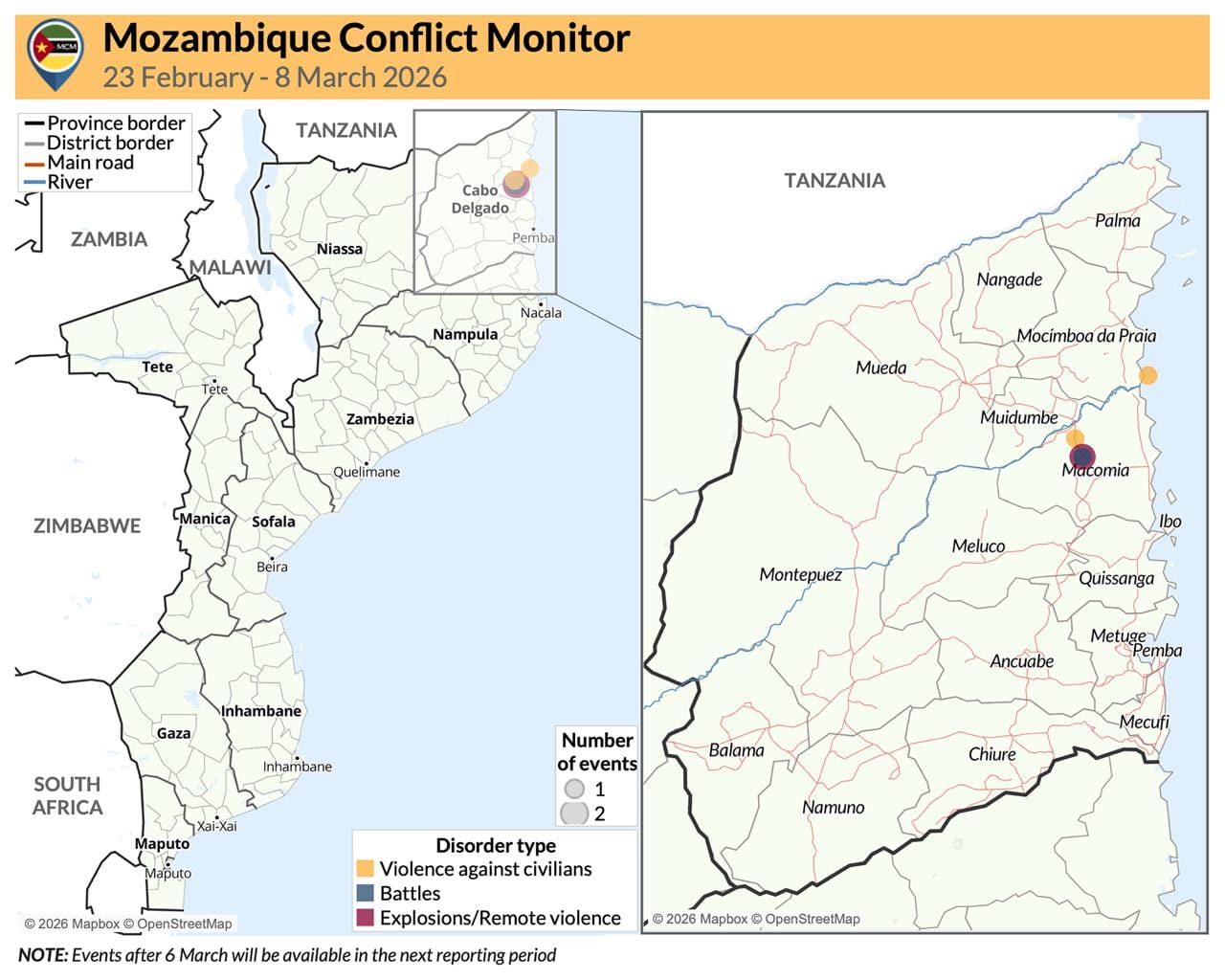
ISM is increasingly active in districts south of Macomia, with its approach to communities becoming more aggressive the further south it operates. In the predominantly Muslim Quissanga district, ISM’s actions have for the most part been non-violent in 2025, in contrast to its sustained violence against civilians in the more Christian districts of Ancuabe and Chiúre. However, this posture in Quissanga is relatively new, suggesting that behavior toward communities is driven by tactical concerns, rather than communities’ religious identities.
The evolution of ISM activity around Cagembe illustrates this change. ACLED first records insurgent activity in the town in January 2020, when the group killed two civilians in the village. A further four were killed in an attack the following month. In September that year, insurgents destroyed much of the town, accusing residents of passing information to the security forces. This violent approach reflects ISM activity in Quissanga more widely in 2020, when insurgents were involved in over 62 political violence events, accounting for most of their activity in the district that year. In approximately two-thirds of those events, ISM targeted civilians.
In Cagembe all ISM action from 2024 to 2025 has been non-violent. ISM benefits from this. The group has developed a sustained presence in the area, where they had a base up to 2021, when the Southern African Development Community Mission in Mozambique put pressure on insurgency positions in the area.
In the province’s other southern districts, which are home to a greater Christian population, ISM’s actions remain predominantly violent. Observers often characterize ISM as specifically targeting Christian people and institutions. Such targeting happens, though only in a relatively small proportion of ISM actions. In those other southern districts in 2024, 17% of political violence involving ISM concerned church buildings, though the proportion has declined to 7% this year.
The evidence suggests a change of posture toward communities in the south is not to be expected, but for reasons that are broader than religious identity. In areas such as Muidumbe and the western side of Macomia district, ISM maintains an aggressive posture toward the civilian population. This reflects community characteristics apart from religion. For example, Frelimo has community structures in those areas, out of which the Local Force arose. ISM has a number of interests across southern Cabo Delgado, including potential income from mining and transit of recruits from Nampula, as well as undermining governance through attacks on communities and their subsequent displacement.
Roundup
ExxonMobil aims to lift force majeure on Palma gas project
ExxonMobil CEO Darren Woods said the company was considering lifting force majeure on its liquefied natural gas project in Mozambique soon. The US company is considering the move after TotalEnergies declared force majeure on its sister project on the Afungi peninsula, in Palma district, in April 2021. "Total just lifted their force majeure, and we're looking at, and are in the process of, trying to do the same," Woods told investors during an earnings call on Friday 31 October. While a press briefing scheduled on Wednesday with Mozambique President Daniel Chapo at Exxon's headquarters in Spring, Texas, was canceled, Woods said the two of them had had a productive meeting.
Pemba mayor concerned by the surge in requests for firearm permits
Satar Abdulgani, the mayor of Pemba, the provincial capital of Cabo Delgado, has expressed alarm over a significant rise in applications for firearm carry permits. Speaking at the launch of the Week of Legality at the attorney general's office on 30 October 2025, Abdulgani noted that the municipal council is being inundated with requests from locals, business owners, and government officials, some of whom are from outside the city. He described the situation as “worrying” amid the growing perception of insecurity in Pemba and the ongoing conflict in the province.
Zambézia mining losses indicate the prize ISM seeks
Zambézia province has lost up to 200 million meticais so far this year, according to the provincial administration. Provincial infrastructure director João Sembane pointed to licensing revenue, local shares of company profits, employment, and taxes as areas of loss.
The Zambézia figures give some indication of the revenues being lost to the state in Cabo Delgado due to poor governance of the sector. A fraction may make its way to ISM, explaining the group’s newfound interest in mining. Recent research from the Rural Environment Observatory in Maputo illustrates the complications in addressing this issue, as local corruption and political rent-seeking dominate the sector. The research also illustrates the potential entry points for ISM to take advantage.
)