
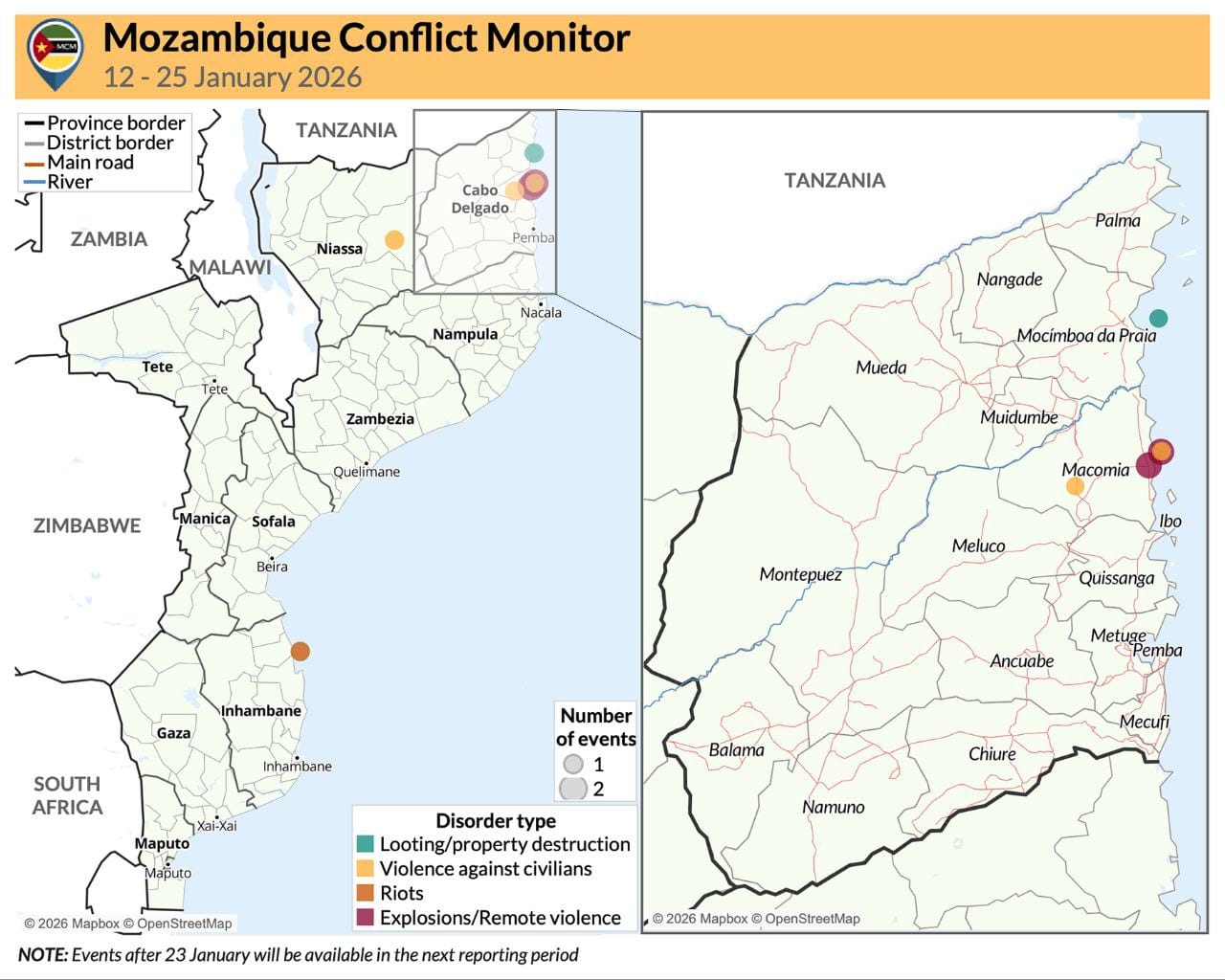
By the Numbers
Data highlights in Cabo Delgado province (12 - 25 January 2026)
At least 6 political violence events (2,310 in total since 1 October 2017)
At least 3 total reported fatalities from political violence (6,432 since 1 October 2017)
At least 2 reported civilian fatalities (2,718 since 1 October 2017)
At least 6 political violence events involving ISM across Mozambique (2,146 since 1 October 2017)
Overview
Islamic State Mozambique (ISM) conducted a rare mortar attack on Rwandan positions in Macomia amid ongoing clashes with Rwandan forces. The group has also focused on resupplying its forces during the difficult rainy season, particularly on the coast, where it retains some freedom of movement by boat. Elsewhere, an attack on a gold mine in Niassa, along with actions by a criminal group in Metuge pretending to be insurgents, illustrate the increasingly complex environment in which security forces have to operate.
Situation summary
RDF and ISM clash in Macomia
According to the Islamic State’s (IS) weekly al-Naba newsletter, insurgents attacked Rwandan positions at Mucojo and Pangane in Macomia district with mortars on 18 and 19 January. IS did not claim casualties. However, according to a local source, at least one mortar landed on a civilian compound in Pangane on 18 January, killing one person and injuring another. Another source in the area claimed the attack caused multiple civilian casualties. There were no reports of casualties from the attack on the Mucojo position.
The mortar attacks continue an emerging trend of insurgents attacking Rwandan forces. Locally, the attack by the insurgents is thought to be in response to Rwanda Defence Force (RDF) attempts to regain control of Quiterajo. Macomia District Administrator Tomás Badae admitted earlier in the month that the Quiterajo area was the only part of the district not under government control.
ISM has had mortars since at least late 2022. In a training video released in January 2023 the group displayed drills with mortars, several of which appeared to be incomplete and poorly handled. This may explain how civilians became the unwitting target in Pangane.
ISM’s use of IEDs continues. On 9 January, a Rwandan military vehicle escorting a commercial convoy was hit by an IED on the N380 near Chitunda, between Macomia and Awasse. This is at least the fourth time that ISM has successfully deployed an IED in the past three months, two of which have been against the RDF.
Coastal communities at risk as ISM resupplies
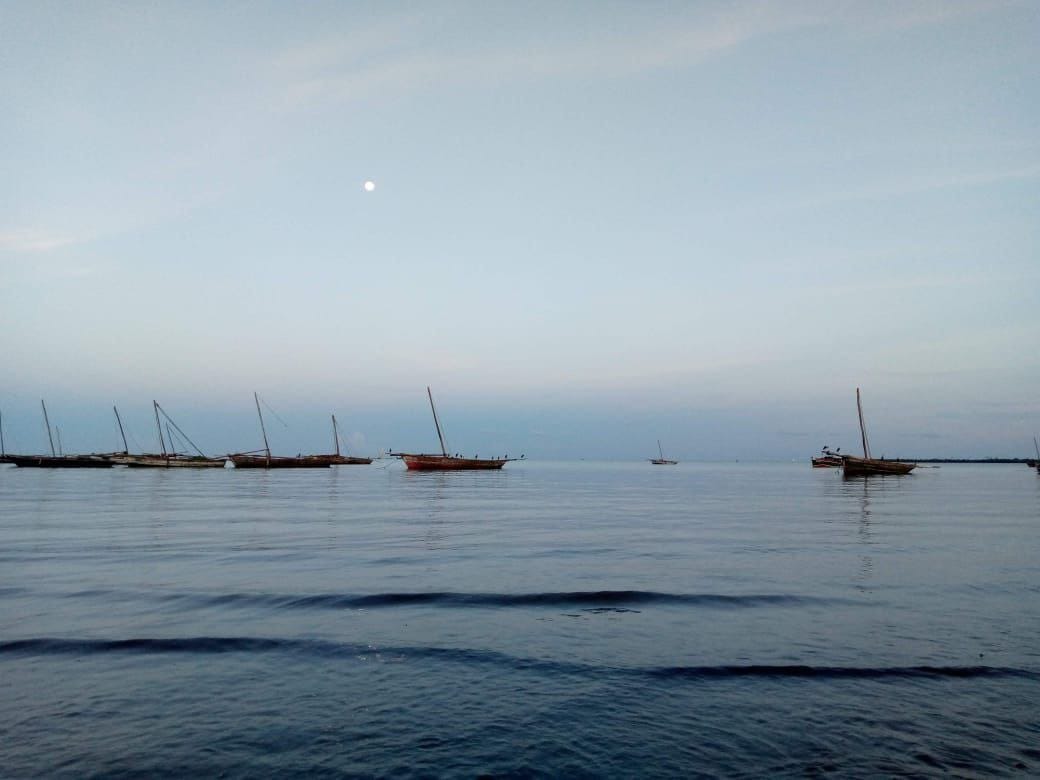
Coastal communities have once again been victims of ISM’s attempts to resupply its fighters as the group continues to move freely along the coast. On 12 January, ISM militants came to the Loque settlement, close to Olumbi on the Palma coast. They were returning boats they had used to take supplies they had seized earlier in the month. According to local sources, after leaving Olumbi they encountered fishers from Pangane at sea and took them and their boats. The men — numbering 27, according to one source — were released on 18 January further down the coast, some south of Mocímboa da Praia, and others at Pangane further south again in Macomia district.
ISM militants were again active on the Palma coastline. Local sources recounted how the insurgents came to Olumbi on 22 January looking for food before taking again to the sea and seeking supplies on Quifuqui island. Olumbi is approximately 20 kilometers south of the proposed liquefied natural gas plant, while Quifuqui is a further 20 km southward.
ISM enters Mocímboa da Praia once again
While one ISM group was moving at sea on 23 January, another entered Mocímboa da Praia. The group came to the Namaik area in the southeast of the town. According to local sources, they were looking for a specific person. When they could not find their primary target, they kidnapped someone else, one source alleged. This is the first confirmed incursion into the town since 5 November 2025, when ISM militants took the children of ISM leader Farido. As in all recent incursions, ISM fighters entered the town from the southeast. These repeated incursions suggest they have likely maintained a presence southeast of the town toward the coast, despite clashing with Rwandan forces near Nabaje in that area as recently as 21 December.
Unidentified armed group attacks Niassa gold mine
On 15 January, an unidentified armed group attacked a small-scale gold mine in Niassa province’s Marrupa district, killing one man and injuring three others. The victim, Ckota Almeida, was a well-known musician in Niassa. The mine site, known as Rereco or Lureco, is likely to the west of Marrupa district headquarters. Though the attackers were likely criminals, the incident illustrates the insecurity that sometimes accompanies small-scale and artisanal mining.
Focus: Gold mine attack highlights generalized insecurity
The attack in the Rereco gold mining area, though likely criminal, exposes the extent of the security challenge facing both communities and the security forces. This is becoming more pronounced as “gold fever,” driven by rising gold prices internationally, has seen small-scale and artisanal mining grow considerably over the past year. This expansion is often marked by violence. In Sofala province in November, miners clashed with farmers after encroaching on their land. More recently, in Nampula’s Mogovolas province, a local civil society organization claims that police killed up to 38 people in an operation against small-scale miners. ISM has also seen the potential in the sector, targeting small-scale gold and gemstone mining operations as a source of funding. Extortion payments to ISM can safeguard against an insurgent attack, while the group’s presence likely acts as a deterrent to the type of criminal gang that attacked Rereco.
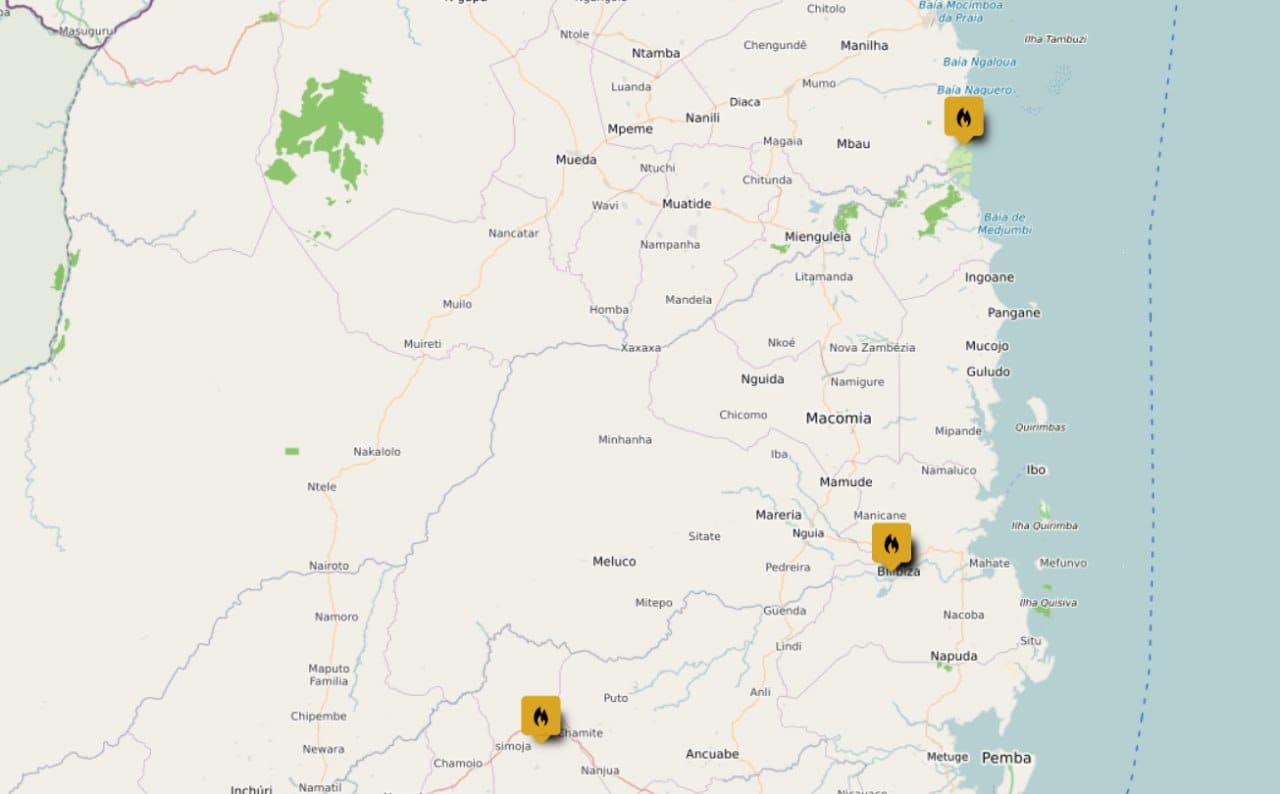
In this context, it is perhaps surprising that it has taken so long for criminals disguised as insurgents to emerge. In the week of 19 January, police in Metuge district arrested five young men for staging attacks on villages in the guise of Islamist insurgents. According to one report, at the village of Namaruha/Namarrau, the young men entered declaring “Allahu akbar” (“God is great”), prompting villagers to flee, and allowing them access to their homes.
Namaruha lies 3 km south of the N1 highway, close to Impire village in Murrebue administrative post. ISM attacks in the area are relatively rare, though militants often cross the N1 close to Impire on sorties south. While police action in arresting the group was effective, online commenters wondered how they can have such success against fake insurgents, and not the real thing.
Roundup
PRM and SERNIC in standoff over arrest warrants
On 21 January, the National Criminal Investigation Service (SERNIC) moved to execute court-issued arrest warrants against several Police of the Republic of Mozambique (PRM) officers, including special operations officers (GOE), who are linked to an ongoing criminal investigation into the killing of SERNIC agent João Paulo, killed by gunmen on 3 July. Reports indicated that the PRM provincial command in Matola was attempting to shield the GOE officers, who were said to have sought refuge on the command's premises after being pursued. In response, SERNIC officers reportedly remained outside, maintaining pressure and demanding that the suspects be handed over. However, both the PRM and the SERNIC later denied that there had been any siege or confrontation, insisting that the operation had been coordinated and based on cooperation to enforce the law.
Floods affect nearly 700,000 people across southern MozambiqueAccording to national disaster authorities, severe flooding triggered by heavy rains since early January have affected nearly 700,000 people (around 151,900 families) across southern Mozambique. Over 103,000 people have been displaced and are currently staying in more than 100 shelters. Since the start of the rainy season in October, including the most recent flooding, at least 124 people have been killed and 148 injured nationwide. The floods have caused extensive damage to housing, schools, health facilities, roads, and agricultural land. From 7 January alone, the authorities have reported damage to 229 health units, 366 schools, four bridges, and over 1,300 km of roads.
National Human Rights Commission reports no evidence of rights violations linked to Mozambique LNG
Mozambique’s National Human Rights Commission (CNDH) says it has so far found no evidence of human rights violations connected to the Mozambique LNG project in Cabo Delgado led by TotalEnergies, according to statements by CNDH chair Albachir Macassar to Lusa. He said investigators had gathered testimonies but had been unable to identify or locate individuals allegedly involved in, or affected by, the reported abuses — including claims that 26 people escaped torture. The commission stressed that the investigation that started in June last year remains ongoing.
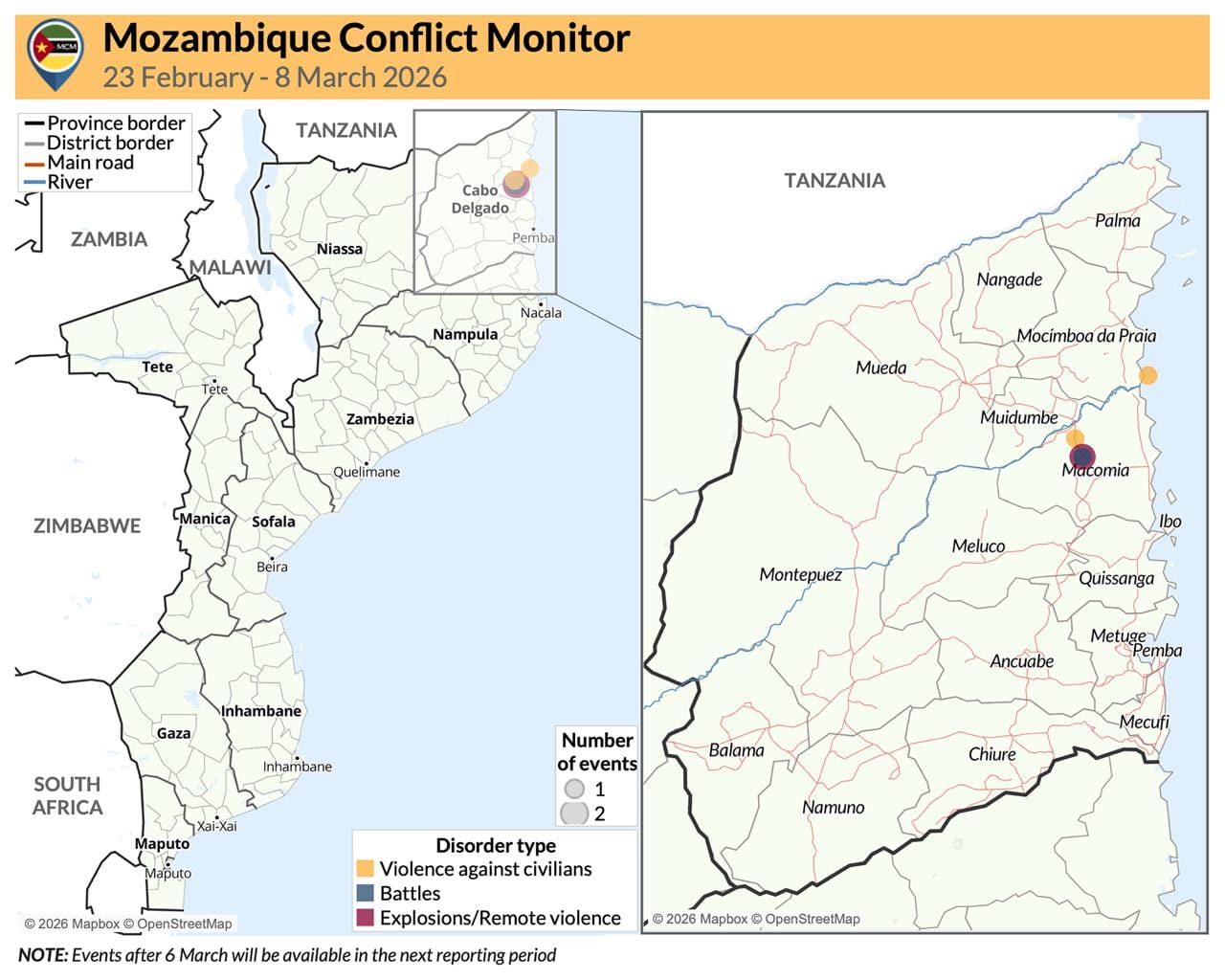


)