
By the numbers
At least 14 political violence events (2,285 in total since 1 October 2017)
At least 46 total reported fatalities from political violence (6,398 since 1 October 2017)
At least 11 reported civilian fatalities (2,706 since 1 October 2017)
At least 13 political violence events involving ISM across Mozambique (2,125 since 1 October 2017)
Overview
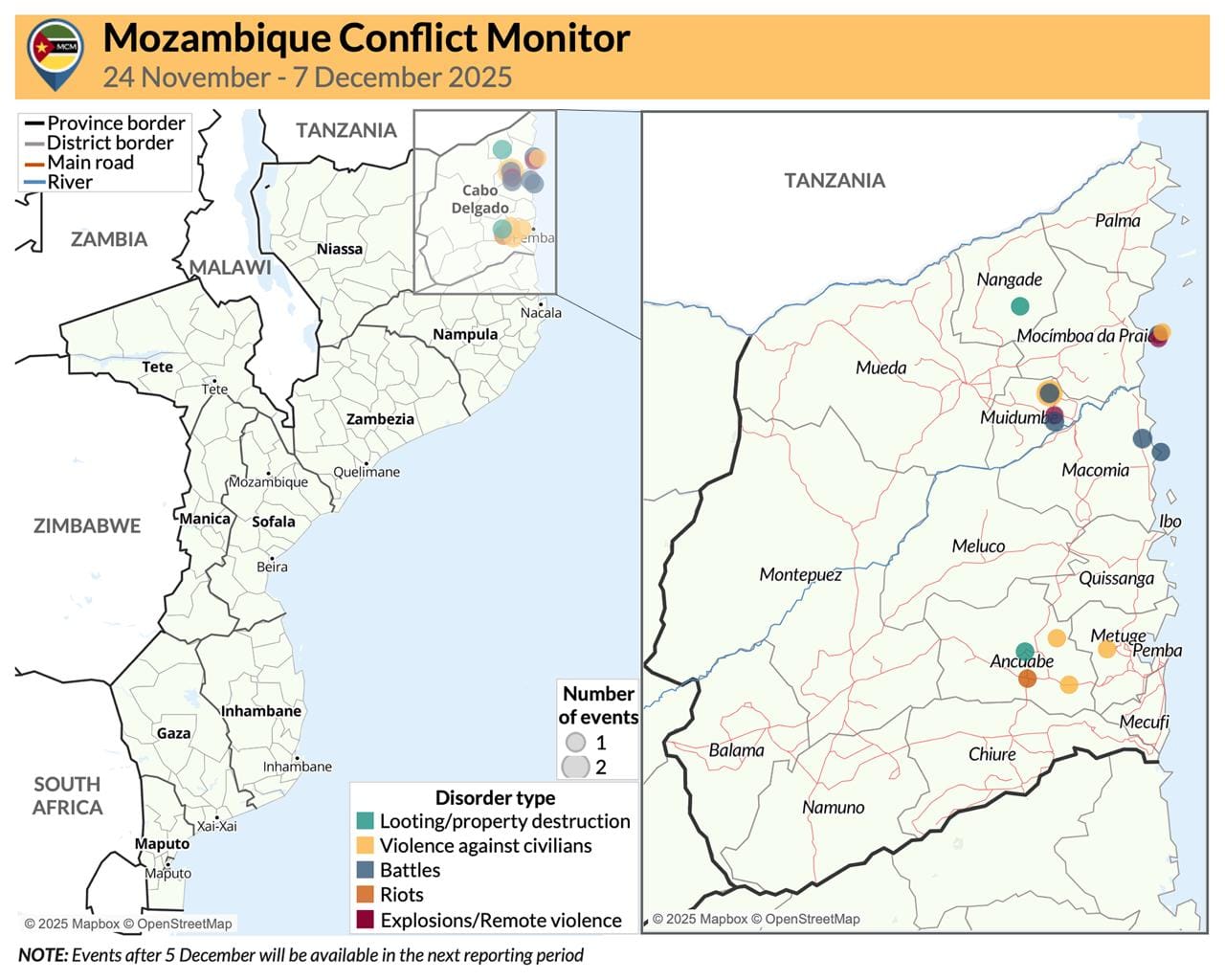
The Rwanda Defence Force (RDF) went on the offensive against Islamic State Mozambique (ISM) in Macomia, Mocímboa da Praia, and Muidumbe districts. In Muidumbe, they responded to ISM attacks on the N380 that closed the road for some days. The most significant clash was in Macomia district, where RDF killed at least 35 ISM fighters. Beyond the province, decisions by the United Kingdom and Netherlands governments to withdraw finance from the LNG project once again put the spotlight on Mozambican forces' persistent targeting of civilians in the conflict.
Situation summary
ISM clashes with Rwandan and Mozambican troops in three districts
In Muidumbe district, the N380 between Chitunda and Xitaxi villages was closed for at least four days, beginning on 5 December, in the wake of increased ISM activity on that stretch of road and a significant military response. Early in the morning on 28 November, ISM attacked a vehicle that was travelling without a military escort, injuring one passenger. On 5 December, ISM detonated an IED, damaging the lead vehicle in a commercial convoy. Zitamar reports that ISM then ambushed a Defense Armed Forces of Mozambique (FADM) unit sent to support the convoy, injuring at least eight soldiers. Islamic State (IS) claimed on its social media channels that in the attack, insurgents injured some soldiers, damaged one vehicle, and captured another. A video clip from the scene supports their claim to have seized one vehicle. According to a local source, during the initial attack on the convoy on 5 December, some people in the convoy were kidnapped and later released once a ransom was paid.
IS issued a further claim for an attack on a joint FADM and RDF patrol on 6 December. This was likely a clash with FADM and RDF reinforcements sent in response to the previous day’s events. By 7 December, likely RDF helicopters undertook airstrikes in the area, according to a source. No casualties were reported.
Airstrikes were also a feature of clashes in Mocímboa da Praia. State forces helicopters, likely RDF, struck Nhonge island, also known as Mionge, on 27 November. This followed armed clashes between the FADM navy and ISM forces on the island earlier that day. According to local sources, ISM forces in the area moved to Nhonge island from the mainland around Ulo village to avoid FADM navy patrols. An IS statement described their visit to Nhonge as a “preaching tour,” though local sources reported theft of property, abduction of civilians, and widespread fear among residents of the island and villages on the nearby coast caused by ISM’s presence.
Further south on the Macomia coast, RDF and ISM forces clashed in the Simbolongo area in the week of 1 December. According to local sources, at least 35 people were killed. Sources indicated that this included ISM militants and civilians, including women and children. Prior to the clashes, on 27 November, RDF captured three ISM fighters close to Pangane. These events follow the establishment of an RDF outpost at Pangane in November. According to a local source, the RDF has also set up outposts at Ilala and Cogolo in the area.
Militants attack a Nangade village as they move toward the Tanzania border
Further north, ISM fighters moved out of Mocímboa da Praia district, northward into Nangade district around 25 November. By 2 December, they had reached the northwest of Nangade district, around the border with Mueda district, and close to the border with Tanzania. A local source assumes that the purpose of such trips to border areas is to pick up recruits and supplies from Tanzania, though this cannot be confirmed. ISM only undertook one attack as they moved through the district, on 26 November, at Ngalonga village, southwest of Nangade district headquarters. There, they burned a store with 300 sacks of cashew nuts and three houses. There were no casualties.
ISM fighters leave Chiure
In the south of the province, a group of ISM fighters killed three civilians close to Ntutupue on the EN1 road on 28 November, according to an IS claim. According to a local source, this was one of two groups of ISM fighters that were seen on 30 November crossing the EN1 near the towns of Impire and Ntutupue, respectively. Further east, on 29 November, another group making its way north killed seven farmers in eastern Ancuabe district, and abducted some others. They are thought to be the last of the group that attacked communities in Nampula’s Eráti and Memba provinces in November. According to separate sources, by 30 November the two groups had made their way to Cagembe in Quissanga district — a village frequently used as a stopping-off point by ISM when moving north or south.
ISM was not the only group active on the EN1. On 1 December, a group armed with “blunt objects,” and from the towns of Silva Macua and Ntutupue was stopping traffic and demanding money. According to state news agency Agência de Informação de Moçambique, a FADM detachment dispersed the likely criminal group. Further west on the EN1 in Metoro town, and one week prior to that incident, on 26 November, a mob killed a Local Forces commander outside a police station in the town. The mob suspected him of killing three motorcycle taxi drivers two months beforehand, and stealing their motorcycles.
Workers demonstrate at LNG plant
Demonstrations took place at the main entrance, known as Quatro Caminhos, to the liquefied natural gas plant (LNG) at Afungi in Palma district on 27 and 28 November. It is unclear what drove the demonstrations. One local source said it involved local staff who had been laid off by security companies and claimed to have been replaced by outsiders. According to another source, staff from various companies were claiming they had not been paid fully and on time.
Focus: LNG investment decisions raise questions over FADM civilian targeting
On 1 December, the UK announced the withdrawal of financial support for Mozambique LNG, the TotalEnergies-led project at Afungi. The UK withdrew both loan and export insurance support, saying that an evaluation of existing risks had shown that the overall project risk increased, though the statement contained no details on specific risks. On the same day, the Netherlands government announced that TotalEnergies had withdrawn a request for financial support through the government’s Atradius agency. However, Atradius' export credit support for TotalEnergies was under review due to allegations of human rights violations, triggered by Politico reporting of the killing of civilians by a Mozambican Joint Task Force (JTF) funded by TotalEnergies at the Quatro Caminhos entrance to the LNG site.
On 1 December, Clingendael, the organization commissioned to undertake the review, published a summary of its investigative report. The report highlighted actions by Mozambican forces that targeted civilians, and confirmed the broad outline of events laid out in Politico. TotalEnergies continues to deny any complicity in human rights abuses.
ACLED data on civilian targeting by FADM in the years since 2021 present a complicated picture. At the heart of the Politico allegations against TotalEnergies was the mechanism through which it supported members of the JTF through direct payments. This mechanism was overhauled in October 2023, with TotalEnergies providing support directly to the central government, rather than to members of the JTF, and the JTF withdrew from the project site.
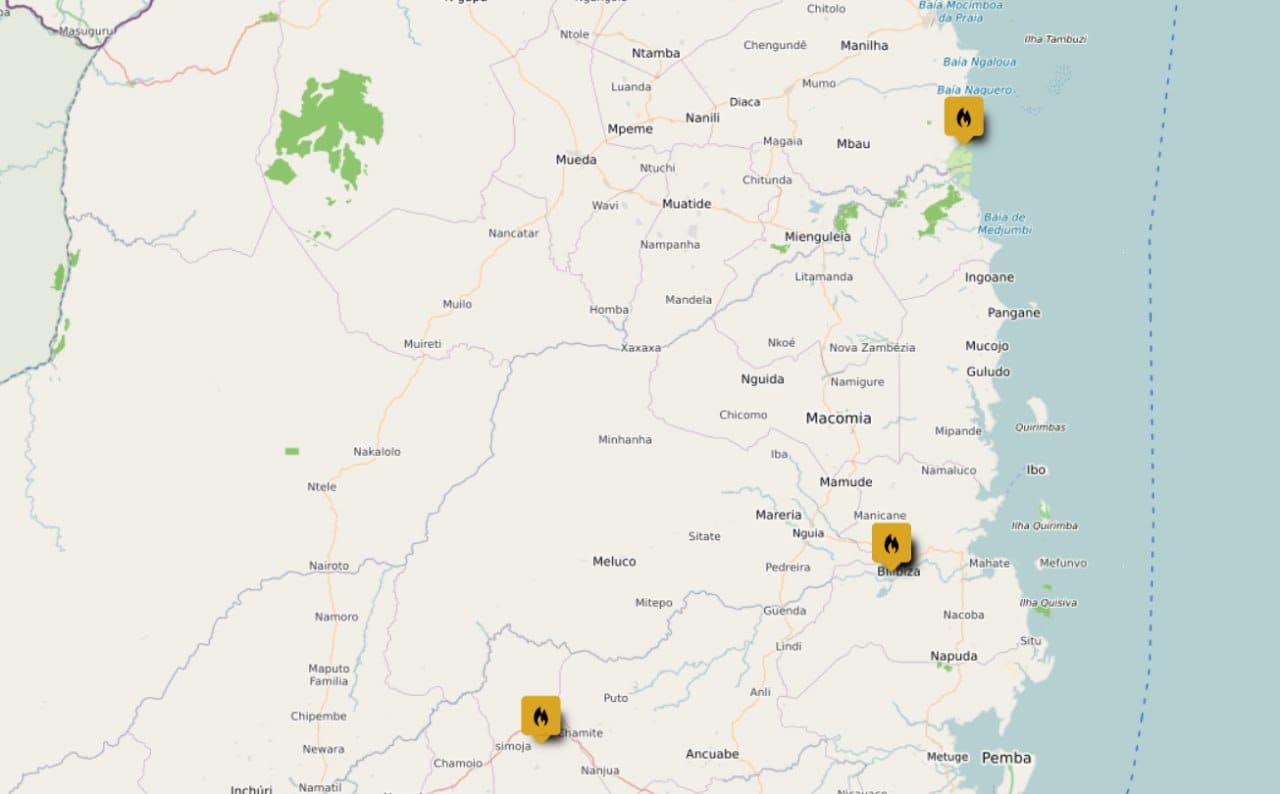
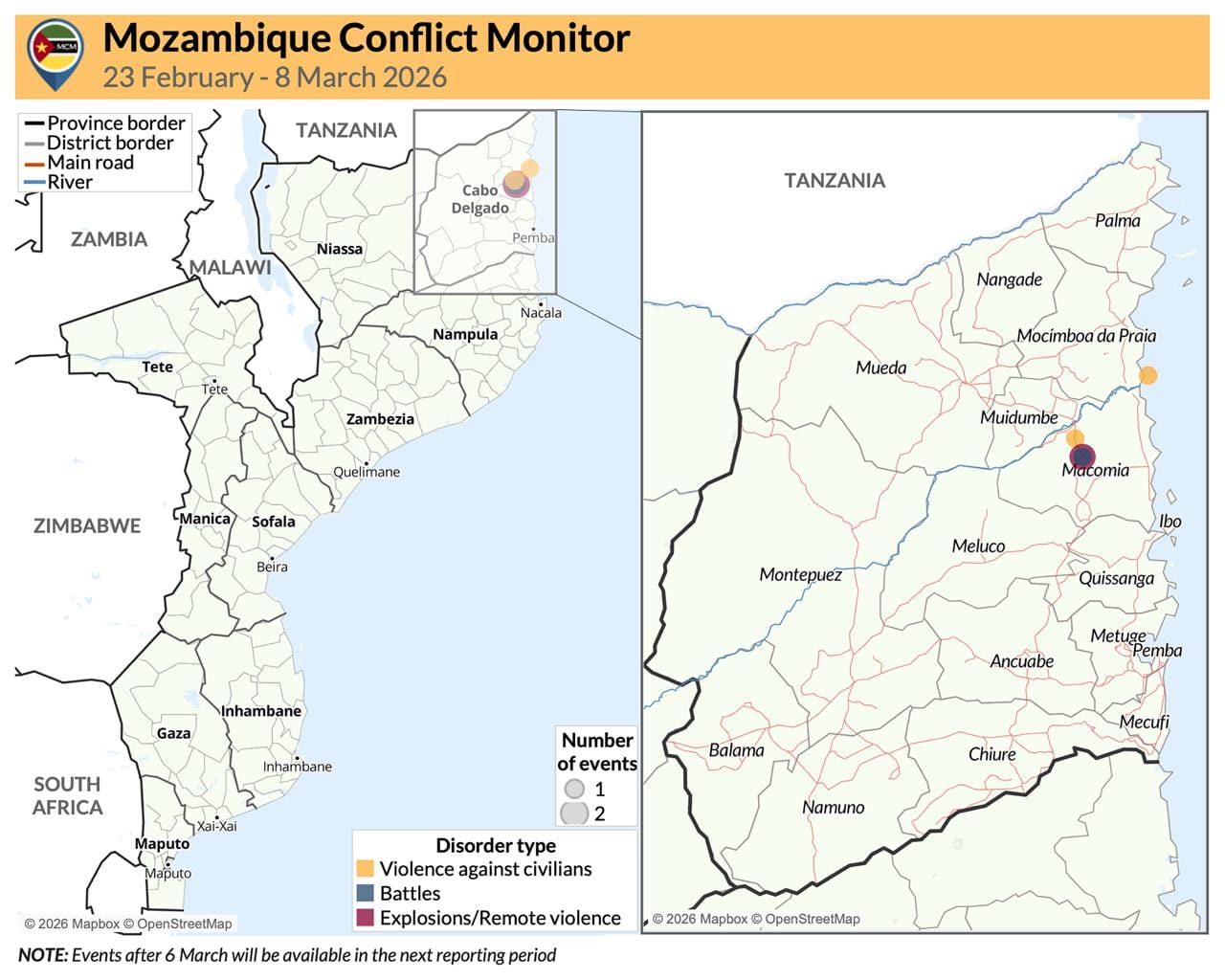
In just over two years since the recalibration of the relationship with TotalEnergies, civilian targeting by FADM in Palma, Nangade, and Mocímboa da Praia districts is no longer an issue (see maps below). However, it clearly remains an issue for FADM elsewhere. In Cabo Delgado province in 2025, civilian targeting accounts for 13% of violent events involving FADM, for the most part concentrated in the nearshore waters of Macomia district.

While this is a lower proportion than in 2024, it is still higher than 2021, when civilian targeting accounted for 11% of FADM’s actions. There is also a worrying trend in civilian fatalities in these incidents, which have been rising throughout 2025, despite the number of events remaining at lower levels (see graph below).
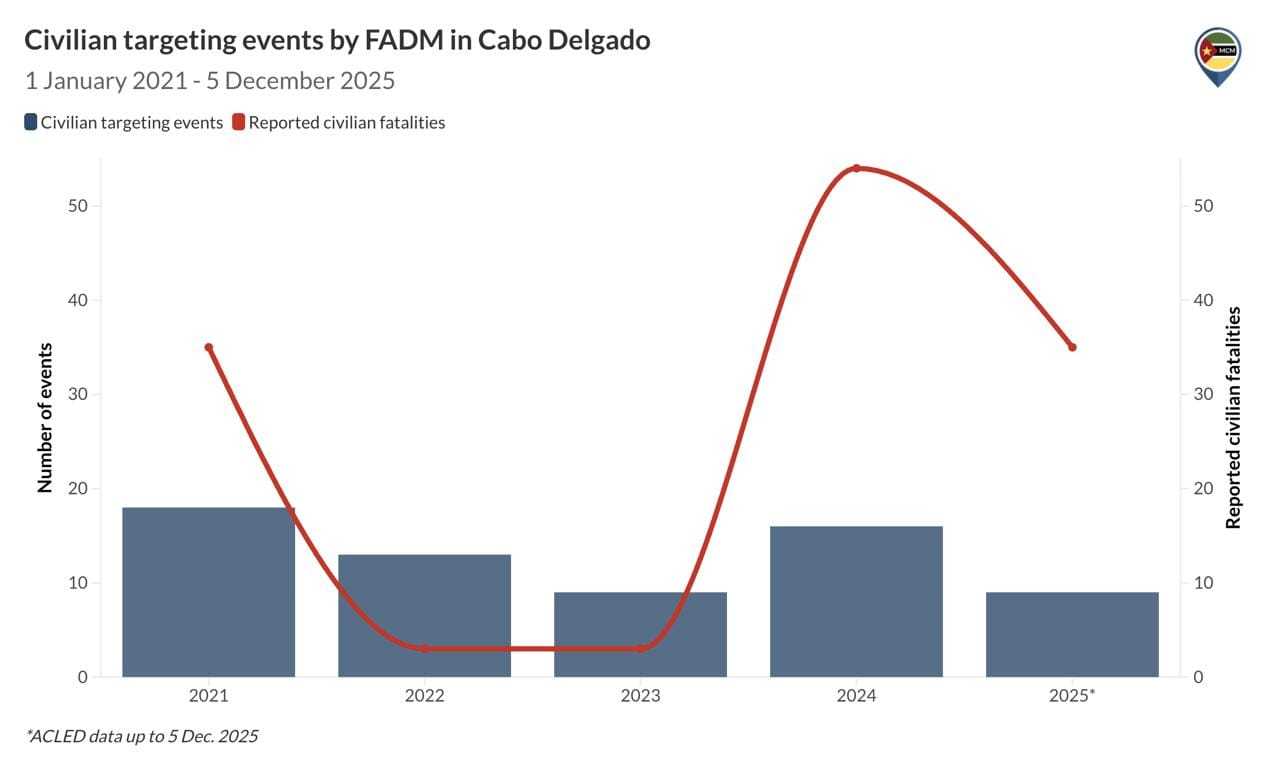
This pattern raises a different set of questions from the ones that Clingendael was asked to investigate. Firstly, those interested in security sector reform will want to consider what steps are necessary to address this continuing problem. Interested parties range from the European Union, which provides technical assistance to FADM, to President Daniel Chapo. Though Chapo denies that such human rights abuses occur, he has made security sector reform a key part of his administrative platform.
There is also an issue for TotalEnergies to consider. Clingendael points to the influence of the more professional Rwandan forces in establishing security in the north of the province and resetting relations with communities. The question for Total Energies, therefore, is whether it could withstand the withdrawal of Rwandan forces. While they are likely to remain for the LNG plant construction period, their presence will not be indefinite. Reform in the operations of FADM will therefore be critical for TotalEnergies also.
Roundup
Security sector reform meets resistance within the police
A series of end-of-year public service meetings is revealing tensions within government over President Chapo’s security sector measures targeting the Police of the Republic of Mozambique (PRM). Speaking at the 27 November meeting of the Ministry of the Interior’s Coordinating Council, President Chapo highlighted corruption in the PRM, particularly in the traffic and migration sectors. He made no direct response to Minister of the Interior Paulo Chachine’s remarks two days prior, which challenged the May decision to place the National Criminal Investigation Service (SERNIC) under the direction of the Attorney General. Speaking at a meeting of the PRM Council, Chachine claimed SERNIC still relied extensively on the police for its work and that the police required an intelligence service to operate effectively.
Attorney General Américo Letela indirectly pushed back at this on 8 December at a meeting of SERNIC’s Coordinating Council. He emphasized the need to strengthen SERNIC, with a priority on removing corrupt elements from the service. In doing so, he hinted at the principal reason President Chapo wants to separate SERNIC from the police — the fear that it protects corrupt elements within PRM.
Budget cuts deepen as recession hits Mozambique’s health sector
Mozambique’s revised budget for 2026 forced the government to cut state revenue projections by 24 billion meticais (380 million US dollars) for this year and 15 billion meticais (US$238 million) for next year. Although officials suggest that essential services will be protected by limiting cuts to non-priority investments, the health sector is already under severe strain. Hospitals lack the funds to cover basic expenses, from medical supplies to water, electricity, and routine maintenance, while chronically low wages continue to push doctors and nurses to demand informal payments from patients. With USAID's withdrawal reducing financial support further and no alternative funding model in sight, ordinary Mozambicans are finding it increasingly difficult to exercise their constitutional right to free health care in practice.
Sweden to cut development aid to Mozambique and four other countries
Sweden is gradually ending its bilateral development cooperation with Mozambique and four other countries, shifting toward fewer aid partnerships. According to a statement from the Swedish Embassy in Maputo, the decision, which will take effect by 31 August 2026, is not linked to events in Mozambique but rather aims to evolve relations into areas such as trade, investment, and collaborative efforts on climate, health, and peace. Support for Zimbabwe, Tanzania, Liberia, and Bolivia will be phased out in the coming years in order to redirect funds toward Ukraine. Support to Ukraine will increase to at least $1.06 billion in 2026 for rebuilding energy infrastructure.
)