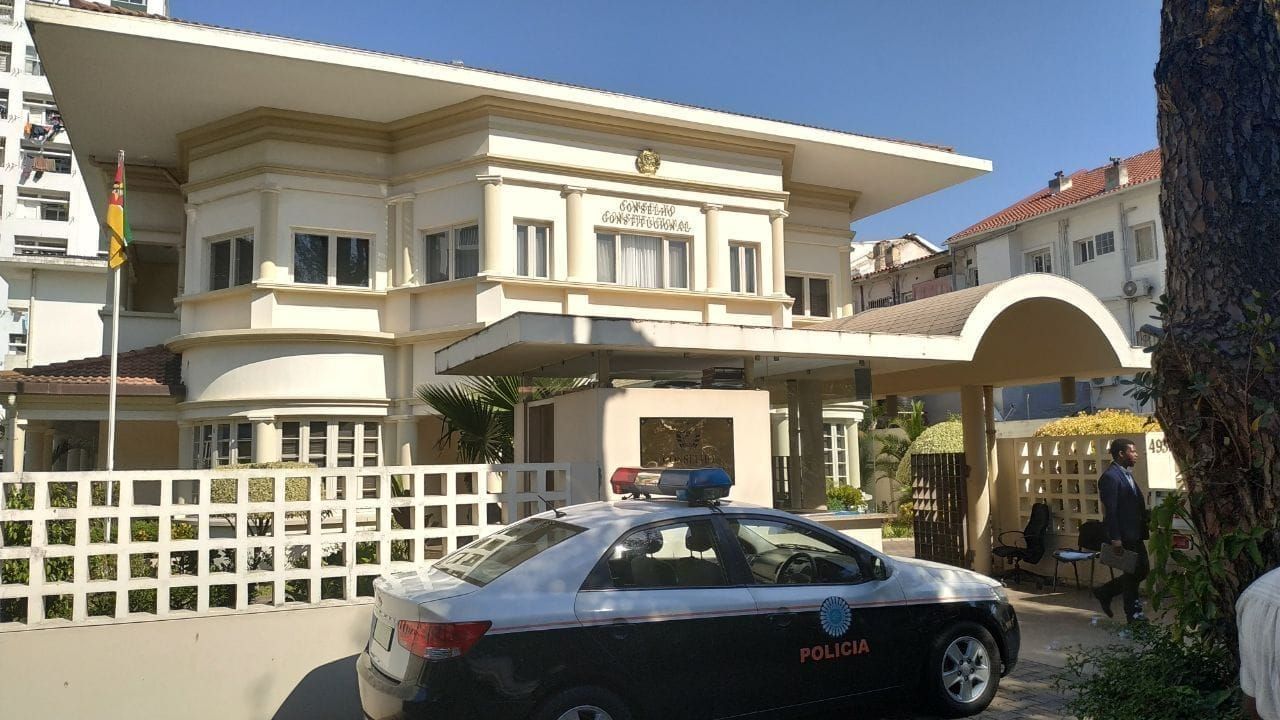
Good afternoon. Adriano Nuvunga’s open letter asks the Constitutional Council to defend the 437,921 people who voted for the Frelimo list led by Margarida Mapandzene Chongo as governor of Gaza. His political instinct is right, but his legal claim is weak. Mapandzene formally resigned, the provincial assembly declared a permanent vacancy, Frelimo selected Alfeu Cuna from among its assembly members, and President Daniel Chapo swore him in last Friday, presenting the whole sequence as the law simply taking its course. On the public record, it did.
Nuvunga turns a vote for a party list into a direct personal mandate. Mapandzene headed Frelimo’s list, and voters knew her victory would make her governor, but her name was not on the ballot as a candidacy in its own right. The same framework lets the winning party choose the replacement when the post falls vacant. Unless there is evidence that the resignation was coerced, the Council has little to act on. That “little” is not “nothing”: in July the Council ordered a Podemos figure reinstated to a parliamentary post he had been removed from, so it is not wholly deaf to how parties treat those they put in office. But the circumstances there were different.
The full Daily Briefing continues below for Pro subscribers. Subscribers to the Zitamar News tier can read the top half, including the full leader article, here.
The evidence of coercion has not been made public. Reports that Frelimo leaned on Mapandzene may be credible, but an allegation is not proof. Her letter cited personal and professional reasons, and she has since said she is leaving in peace and with a clear conscience. Nuvunga is asking the Council to treat political suspicion as an established constitutional violation. It has no power to reach inside a party meeting, and cannot infer coercion simply because the official explanation is unconvincing.
The weakness of the complaint should not obscure the defect it identifies, which is real, did not begin in Gaza, and is not Frelimo’s alone. Elected provincial governors were a Renamo demand, granted in the decentralisation package that accompanied the peace process and written into the constitution in 2018 by agreement of the two main parties. What Renamo secured, though, was not a governor chosen directly by voters but the head of whichever party list tops the provincial poll, installed and later removable by that party.