By Mariana Abreu and Alexander Abdelilah
Additional reporting by: Jörg Brase (ZDF), Gaëlle Laleix (RFI), Micael Pereira (Expresso), Quentin Peschard (The Observers of France 24), Zitamar News team
On the morning of January 7th, 2025, it was hot and muggy in Pemba, Mozambique. Arlindo Chissale, a 46-year-old reporter and editor of Pinnacle News, an online community journalism outlet with over 70,000 followers, boarded a bus. He was bound for Nacala, a town eight hours south, where he worked at a graveyard. (Like many journalists in the region, Chissale could not afford to live solely from his journalism salary and held several jobs.)
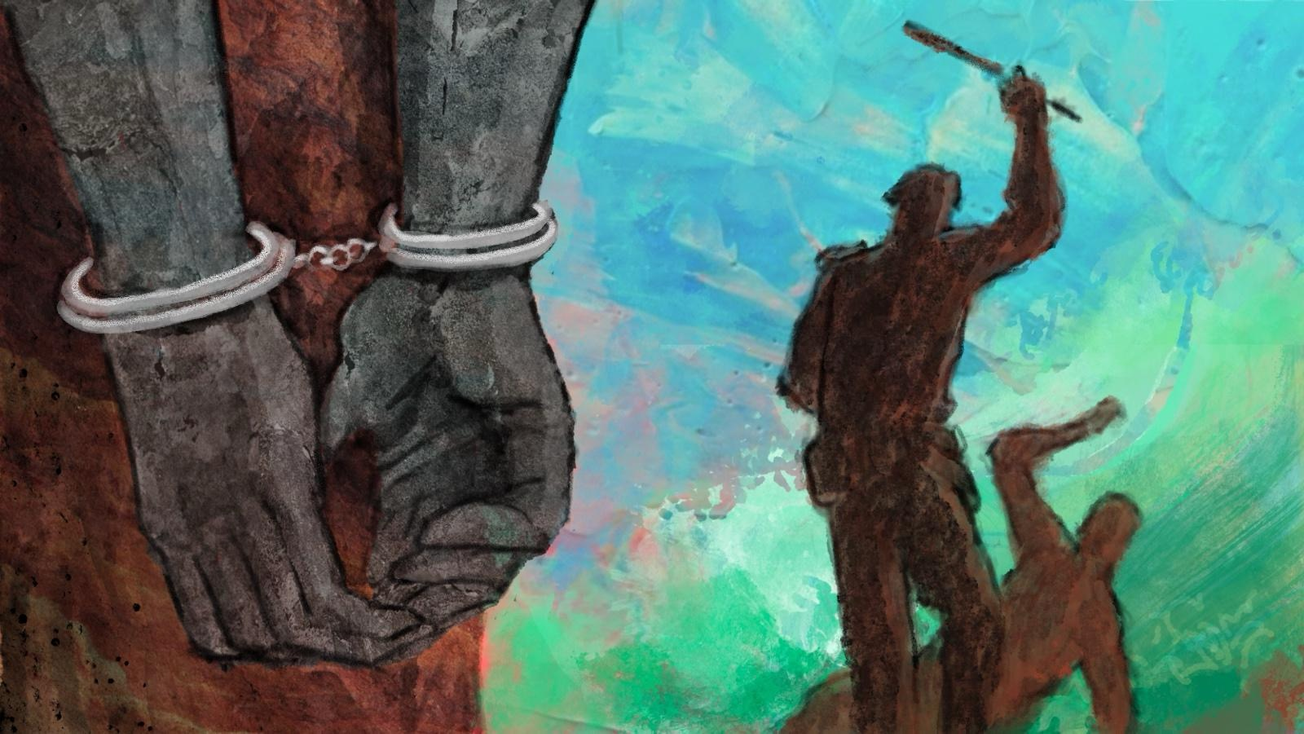
During Chissale’s journey to Nacala, a white unmarked car suddenly blocked the road. Five men, two reportedly wearing police uniforms, dragged Chissale out of the vehicle, beat him, shoved him into the car, and drove away, according to a UN report. Nearly a year and a half after his abduction, Chissale’s fate remains unknown.
His peers described Chissale as a fearless community reporter and an expert on his home region of Cabo Delgado, the northernmost province of Mozambique. Chissale had dedicated his life to documenting the struggles of his community, which in recent years had been beset by the violent Islamist insurgency Al-Shabab, mounting state-led military operations, and billion-dollar Western-backed gas extraction projects.

The region has seen activists, reporters, and opposition members increasingly targeted or abducted in a pattern of attacks attributed to state-led armed groups. Chissale himself was a vocal member of the rising opposition, which threatened the governing party Mozambique Liberation Front (FRELIMO)’s 51-year-long reign.
For five months, more than 30 journalists from 10 media organizations collaborated to expose the state-sponsored machinery of repression that Chissale had denounced for years, and that may have been implicated in his disappearance. The consortium’s reporting suggests Chissale’s abduction was part of a broader pattern of political persecution, with dozens of cases pointing to opposition members being targeted by actors linked to FRELIMO and Mozambique’s security forces, particularly in the aftermath of the October 2024 general elections.

Allegations of electoral fraud
“Chissale handled communications [within the opposition], but he also had political ambitions,” Venâncio Mondlane, head of the opposition party National Alliance for a Free and Autonomous Mozambique (ANAMOLA) and former presidential candidate, told the consortium.
But around the 2024 general elections, which re-elected FRELIMO at both a presidential and parliamentary level, Chissale began publicly accusing the authorities of electoral fraud. “He communicated very clearly, and with remarkable eloquence, about the mechanics of electoral fraud, explaining how it was organized, teaching people how to identify it and how to fight it,” Mondlane said. This is why, Mondlane believes, “he was ultimately abducted.”.

(The Mozambican authorities did not respond to Forbidden Stories’ questions regarding the case of Arlindo Chissale.)
The election results were heavily disputed by the opposition, sparking nationwide protests that plunged the country into turmoil. Despite a court order, the District Election Commission refused to hand over the official tally sheets and results of 28 polling stations, Chissale claimed in an interview for Deutsche Welle in October, before encouraging people to strike.
On October 21, 2024, Riot police fired tear gas to disperse a small crowd in Maputo after two of opposition leader Venâncio Mondlane’s associates were shot dead (Credit : VOA Africa).
The EU Election Observation Mission report on Mozambique also documented repeated transparency failures, including election officials withholding results sheets from observers and journalists, and the non-publication of polling-station results.
Over 400 targeted in the opposition
Since the 2024 elections, more than 400 of Mondlane’s supporters have reportedly been subjected to violence, including 55 who were killed. According to party representatives interviewed by the consortium, Chissale became one of many victims of this broader campaign of repression directed at those who challenged the regime during the election period. In January 2025, the NGO DECIDE reported more than “4,000 detained and over 3,000 injured” in connection with the post-election crackdown. “We’re talking about irreversible injuries,” Mondlane said.
Complaints filed by Mondlane with Mozambique’s Attorney General’s Office, reviewed by Forbidden Stories, describe authorities and police units committing extrajudicial killings, severe injuries, mutilations, arbitrary arrests, enforced disappearances and the destruction of property against Mondlane’s supporters.
(The Mozambican Ministry of Interior and Prosecutor’s Office did not reply to the consortium’s request for comment.)
The “Mozambique Exposed” project has found that the use of block leaders called “chefes de quarteirão,” is one of the state’s methods for crushing dissent. According to several sources interviewed by the consortium, block leaders are local operatives affiliated with the ruling party to monitor the population at a neighbourhood level. Though they don’t have formal administrative status, they remain deeply embedded in the daily lives of Mozambicans.
Historically, block chiefs functioned as the neighborhood's eyes and ears. “You’d have to tell them where you were moving, for how long, for which purpose, where you stay. You also had to be registered with them if you moved into the block. So these people, they have information,” Carlos Quembo, researcher at Amnesty International, told the consortium.
According to Quembo, they also hold party meetings at a block level, giving them unique insight into local political allegiances, including potential opposition supporters. “In fact, I would argue they are the only ones who have concrete information about who is who in each neighborhood.”


According to a diplomatic source, block chiefs were used to monitor opposition members, including lower-ranking activists who had organized or participated in post-election demonstrations, and would then send their names up the FRELIMO ranks. A block chief, who spoke to the consortium on the condition of anonymity, confirmed that in some cases, information circulated between local structures and the authorities.
(Neither the Mozambican authorities nor Frelimo responded to Forbidden Stories' requests for comment.)
Death squads
The consortium documented dozens of cases that reveal a pattern of opposition’s supporters killings that intensified in the months following the October elections. One of the highest-profile killings occurred on October 19, 2024, when Mondlane’s lawyer, Elvino Dias, was shot in the streets of Maputo, the capital city of Mozambique. Dias was driving with Paulo Guambe, then an official with PODEMOS, an opposition party that supported Mondlane’s candidacy.
In another incident, on December 22, 2024, unidentified gunmen shot Eugénio Raúl Madeira, a mobilization secretary for Podemos in Zambezia province. The complaint ANAMOLA filed with the Attorney General’s Office documents six cases in which “death squads” targeted opposition members. Other cases involve members of special police units allegedly abducting and beating political opponents. According to a 2025 Human Rights Watch report, “Mozambican authorities have failed to conduct credible investigations into the wave of political killings following the October 2024 general elections.”
Testimonies and documents gathered by Forbidden Stories appear to implicate Mozambique’s state security forces, including the police’s criminal investigation service (SERNIC), the Rapid Intervention Unit (UIR), and other special units like the Special Operations Group (GOE).
The case of Américo Sebastião, a Portuguese businessman abducted in Mozambique nearly a decade ago, has long gone cold. But documents obtained by Forbidden Stories, detailing the findings of an investigation conducted by Portuguese authorities, suggest that a member of SERNIC was implicated.
Sebastião was abducted in July, 2016, at a gas station in Nhamapaza, in the central province of Sofala. According to witnesses, as Sebastião pumped gas into his car, three men in uniform handcuffed him and forced him into a vehicle before driving away. Their alleged motive: Sebastião, who worked in forestry, was suspected of supporting members of the opposition party RENAMO, the files state. The consortium found no evidence of such a support.

In June 2017, Portuguese authorities provided regional prosecutors the phone number and alias (Avião) of the man suspected of overseeing Sebastião’s abduction, the documents show. The consortium’s open-source analysis of the number found that it was seemingly linked to an individual associated with SERNIC. When contacted by the consortium, the agent, who identified himself as Sergio Avião, confirmed that he had been a police officer at the time of Sebastião’s abduction and that he now works for SERNIC. He denies any involvement in the case: “We only heard that he was kidnapped. Who kidnapped him, or what the people were like, was never discussed. (...) We traveled to the location thinking it was in our area of jurisdiction. When we discovered that it wasn't, (...) we pulled back.” Avião also stated that Mozambican authorities never reached out to him or questioned him about his alleged involvement.
In 2019, Ana Gomes, a Portuguese former diplomat, traveled to Mozambique to meet with Sebastião’s wife and urge authorities to investigate the case, describing the visit as an act of “desperation” after the Mozambican judiciary had rejected Portuguese offers of cooperation. “They knew the [Portuguese] Judicial Police investigation could lead to the mastermind behind the kidnapping,” Gomes said, whom she believed to be someone in power.
(Contacted by Forbidden Stories, the Portuguese Ministry of Foreign Affairs stated that Sebastião’s case was “closely monitored at both the political and diplomatic levels throughout the years.” The Portuguese Judicial Police added that it remains fully available to cooperate with the authorities of other states.)
(Mozambican authorities did not reply to the consortium’s questions.)
Enforced disappearances
Disappearances like Sebastião’s have become common in Mozambique, where an anti-terror law passed in 2020 permits suspects to be detained for up to 16 months without charge. “You cannot just detain someone without evidence, take them from the street and claim this is a suspect. You have to have a package of informational evidence that makes a particular person a suspect,” Quembo of Amnesty International said.
In 2024, the United Nations Population Fund (UNFPA) collected testimonies, accessed by Forbidden Stories, of Cabo Delgado residents whose family members disappeared. “The military took [a relative of mine]. He was crying and screaming. The population watched. The family went to the [police] and asked for my brother. They said they did not know...They said it was useless to continue looking for my relative because ‘he was gone,’,” a testimony said.
According to sources, many of those abducted are held incommunicado in improvised detention centres whose location is unknown to the general public. “Some of these people were detained under poor conditions in containers, for example,” Quembo told the consortium. “There have been reports of some women who were pregnant, and they ended up in labor during their detention, also in deteriorating conditions,” he said. According to a European diplomatic source interviewed by Forbidden Stories and who wished to remain anonymous, “black sites are jointly operated by the Interior Ministry [the police], and the Mozambican intelligence services.”
The account of Amilcar Francisco, an ANAMOLA supporter who was abducted last April, highlights the role of police units in such attacks. “When they tied me up and put a hood over my head, they started saying, ‘You’re all going to end up like this.’ Then, they started naming my colleagues who are part of our organization,” Francisco told the consortium. After torturing him, the officers he recognised as belonging to SERNIC left him for dead.
(Mozambican authorities did not reply to the consortium’s request for comment.)
To the families of the disappeared, the lack of closure lingers like an open wound. Chissale’s relatives now believe he is dead. In some ways, he had prepared them for that eventual outcome. Leading up to his disappearance, “he hadn’t been doing well, he was being watched, followed, and he warned us,” Macário, Chissale’s brother, told Forbidden Stories. A colleague similarly recalled Chissale telling him, “I'm already a dead man.”
“But we didn’t expect him to just disappear…we could have given him a dignified burial, but that just didn’t happen,” his brother said.